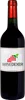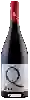
Weingut Alexander FreimuthLignum Blauer Spätburgunder
 Red wine



In the mouth this red wine is a with a nice freshness.
This wine generally goes well with poultry, beef or veal.
Taste structure of the Lignum Blauer Spätburgunder from the Weingut Alexander Freimuth
Light | Bold | |
Smooth | Tannic | |
Dry | Sweet | |
Soft | Acidic |
In the mouth the Lignum Blauer Spätburgunder of Weingut Alexander Freimuth in the region of Rheingau is a with a nice freshness.
Food and wine pairings with Lignum Blauer Spätburgunder
Pairings that work perfectly with Lignum Blauer Spätburgunder



Original food and wine pairings with Lignum Blauer Spätburgunder

The Lignum Blauer Spätburgunder of Weingut Alexander Freimuth matches generally quite well with dishes of beef, veal or game (deer, venison) such as recipes of chinese fondue, homemade marengo veal or deer stew.
Details and technical informations about Weingut Alexander Freimuth's Lignum Blauer Spätburgunder.
Discover the grape variety: Sauterne
Intraspecific crossing between Sémillon Blanc and Sauvignon Blanc carried out in 1892 by Numa Naugé. This variety has been multiplied very little and is now in the process of disappearing.
Last vintages of this wine
The best vintages of Lignum Blauer Spätburgunder from Weingut Alexander Freimuth are 2011, 0
Informations about the Weingut Alexander Freimuth
The Weingut Alexander Freimuth is one of of the world's greatest estates. It offers 38 wines for sale in the of Rheingau to come and discover on site or to buy online.

The wine region of Rheingau
Rheingau is one of the most important of Germany's 13 Anbaugebiete wine regions. However it is far from the biggest; with 3,076 hectares (7,600 acres) of Vineyard">Vineyards documented in 2012, its output is around one tenth of that from the Pfalz and Rheinhessen regions. Located on the Rhine a 20-minute drive west of Frankfurt, the -gau suffix denotes that it was once a county of the Frankish Empire. The classic Rheingau wine is a DryRiesling with pronounced Acidity and aromas of citrus fruits and smoke-tinged minerality – typically more "masculine" than its equivalent from the Mosel.
The word of the wine: Second fermentation
In the making of champagne, fermentation of the base wine to which is added the liqueur de tirage and which takes place in the bottle. This second fermentation produces the carbon dioxide, and therefore the bubbles that make up the effervescence of the wine.