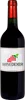
Weingut Alexander FreimuthErstes Gewächs Rüdesheimer Magdalenenkreuz Blauer Spätburgunder
 wine
wine
This wine generally goes well with
The Erstes Gewächs Rüdesheimer Magdalenenkreuz Blauer Spätburgunder of the Weingut Alexander Freimuth is in the top 0 of wines of Rheingau.
Details and technical informations about Weingut Alexander Freimuth's Erstes Gewächs Rüdesheimer Magdalenenkreuz Blauer Spätburgunder.
Discover the grape variety: Grillo
A very ancient grape variety still grown today in western Sicily. Very often associated with catarratto and inzolia, it produces the famous Marsala liqueur wine. It is also increasingly being vinified as a single variety and produces excellent dry wines full of freshness and fruitiness. Grillo is believed to be the result of an intra-fertile cross between catarratto and Muscat of Alexandria or zibibbo, obtained in 1869 by Antonino Mendola. It is represented by two biotypes that can be easily recognized, but it seems that winegrowers attach little importance to them. Little known in other Italian regions - in Liguria it is known as "rossese bianco" - it can also be found in Australia and South Africa. It is not widely grown in France, although it is interesting because of its ability to withstand hot climates and drought, and to ripen quite late.
Informations about the Weingut Alexander Freimuth
The Weingut Alexander Freimuth is one of of the world's great estates. It offers 38 wines for sale in the of Rheingau to come and discover on site or to buy online.

The wine region of Rheingau
Rheingau is one of the most important of Germany's 13 Anbaugebiete wine regions. However it is far from the biggest; with 3,076 hectares (7,600 acres) of Vineyard">Vineyards documented in 2012, its output is around one tenth of that from the Pfalz and Rheinhessen regions. Located on the Rhine a 20-minute drive west of Frankfurt, the -gau suffix denotes that it was once a county of the Frankish Empire. The classic Rheingau wine is a DryRiesling with pronounced Acidity and aromas of citrus fruits and smoke-tinged minerality – typically more "masculine" than its equivalent from the Mosel.
The word of the wine: Maturing (champagne)
After riddling, the bottles are stored on "point", upside down, with the neck of one bottle in the bottom of the other. The duration of this maturation is very important: in contact with the dead yeasts, the wine takes on subtle aromas and gains in roundness and fatness. A brut without year must remain at least 15 months in the cellar after bottling, a vintage 36 months.