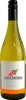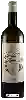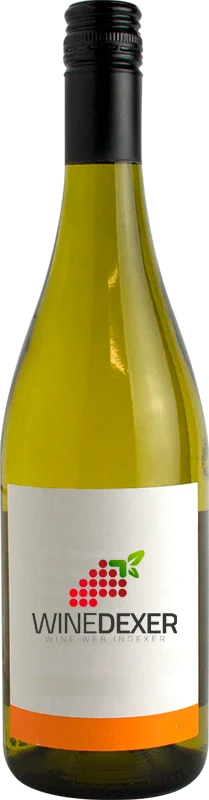
Winery Weinbau GartnerSchloss Thürn Weissburgunder
 White wine
In the mouth this white wine is a with a nice freshness.
This wine generally goes well with rich fish (salmon, tuna etc), shellfish or mild and soft cheese.
Taste structure of the Schloss Thürn Weissburgunder from the Winery Weinbau Gartner
Light | Bold | |
Dry | Sweet | |
Soft | Acidic |
In the mouth the Schloss Thürn Weissburgunder of Winery Weinbau Gartner in the region of Weinland is a with a nice freshness.
Food and wine pairings with Schloss Thürn Weissburgunder
Pairings that work perfectly with Schloss Thürn Weissburgunder



Original food and wine pairings with Schloss Thürn Weissburgunder

The Schloss Thürn Weissburgunder of Winery Weinbau Gartner matches generally quite well with dishes of rich fish (salmon, tuna etc), shellfish or mild and soft cheese such as recipes of christmas salad, monkfish tail with coconut milk and curry or honey chicken salad.
Details and technical informations about Winery Weinbau Gartner's Schloss Thürn Weissburgunder.
Discover the grape variety: Reichensteiner
Intraspecific crossing between the müller-thurgau and a variety resulting from the crossing (madeleine angevine x calabre blanc) obtained in Germany in 1939 by Heinrich Birk (1898-1973). It can be found in France (Alsace, etc.), Great Britain, the Netherlands, Germany, Belgium, Switzerland, New Zealand, etc.
Informations about the Winery Weinbau Gartner
The Winery Weinbau Gartner is one of of the world's greatest estates. It offers 8 wines for sale in the of Weinland to come and discover on site or to buy online.

The wine region of Weinland
Weinviertel DAC – whose name translates as "wine quarter" – is an appellation in Niederösterreich (Lower Austria). It is by far the largest Districtus Austriae Controllatus wine region in Austria. It was also the first Austrian wine region to be given that title, in 2002, with a DAC Reserve designation added in 2009. The designation applies only to white wines from the Grüner Veltliner Grape variety.
The word of the wine: Rancio
Odour and taste characteristic of certain wines that have undergone oxidative maturation, i.e. in contact with oxygen (vin jaune du Jura, dry rancio du Roussillon, maury, banyuls, rivesaltes, etc.).