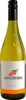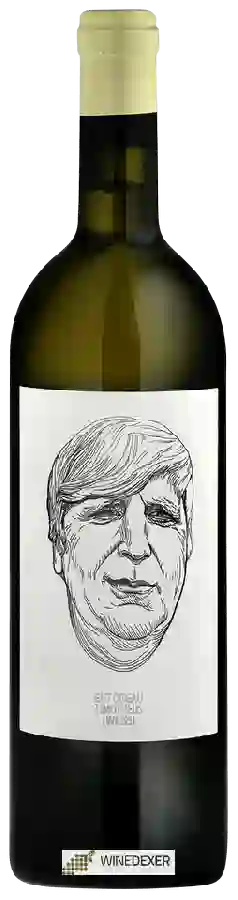
Winery Gut OggauTimotheus Weiss
 White wine


This wine generally goes well with pork, vegetarian or lean fish.
Wine flavors and olphactive analysis






On the nose the Timotheus Weiss of Winery Gut Oggau in the region of Weinland often reveals types of flavors of cream, grapefruit or oaky and sometimes also flavors of tropical, citrus or apples.
Food and wine pairings with Timotheus Weiss
Pairings that work perfectly with Timotheus Weiss



Original food and wine pairings with Timotheus Weiss



The Timotheus Weiss of Winery Gut Oggau matches generally quite well with dishes of pork, rich fish (salmon, tuna etc) or shellfish such as recipes of macaroonade from sète, tuna provencal style or samoussa 3 reunionese cheeses.
Details and technical informations about Winery Gut Oggau's Timotheus Weiss.
Discover the grape variety: Cabernet-Severnyi
Interspecific crossing between (dimiat or galan x vitis amurensis) and (vitis amurensis x vinifera unknown) obtained in 1978 by the Institute of Research and Development of Viticulture and Winemaking of Novotcherkassk (Russia). It can be found in Canada (Nova Scotia, Ontario, etc.), the United States, Russia and many Eastern European countries. Note that the dimiat is a relative of the white gouais.
Last vintages of this wine
The best vintages of Timotheus Weiss from Winery Gut Oggau are 2018, 2014, 2012, 2017 and 2015.
Informations about the Winery Gut Oggau
The Winery Gut Oggau is one of of the world's great estates. It offers 22 wines for sale in the of Weinland to come and discover on site or to buy online.

The wine region of Weinland
Weinviertel DAC – whose name translates as "wine quarter" – is an appellation in Niederösterreich (Lower Austria). It is by far the largest Districtus Austriae Controllatus wine region in Austria. It was also the first Austrian wine region to be given that title, in 2002, with a DAC Reserve designation added in 2009. The designation applies only to white wines from the Grüner Veltliner Grape variety.
The word of the wine: Reduced
This is said of aromas that are reminiscent of a stale wine and that can be released when a long-closed bottle is opened. They generally fade with airing.