The Winery Walter de Batte of Liguria
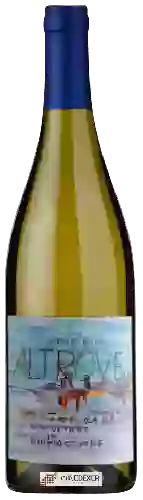
Winery Walter de Batte
The winery offers 5 different wines
4.1


Note - 1Note - 1Note - 1Note - 1Note - 0
Its wines get an average rating of 4.1.
It is ranked in the top 4 of the estates of Liguria.
It is located in Liguria

The Winery Walter de Batte is one of the largest wineries in the world. It offers 5 wines for sale in of Liguria to come and discover on site or to buy online.

Top Winery Walter de Batte wines

Looking for the best Winery Walter de Batte wines in Liguria among all the wines in the region? Check out our tops of the best red, white or effervescent Winery Walter de Batte wines. Also find some food and wine pairings that may be suitable with the wines from this area. Learn more about the region and the Winery Walter de Batte wines with technical and enological descriptions.

The top white wines of Winery Walter de Batte

Food and wine pairings with a white wine of Winery Walter de Batte

How Winery Walter de Batte wines pair with each other generally quite well with dishes of pasta, shellfish or mature and hard cheese such as recipes of tagliatelle with foie gras, lobster and scallops on a bed of leeks or cheese fondue.

Organoleptic analysis of white wines of Winery Walter de Batte

On the nose the white wine of Winery Walter de Batte. often reveals types of flavors of non oak, earth or microbio and sometimes also flavors of oak, tree fruit or citrus fruit. In the mouth the white wine of Winery Walter de Batte. is a powerful with a nice freshness.

The best vintages in the white wines of Winery Walter de Batte

  • 2011With an average score of 4.30/5
  • 2010With an average score of 4.30/5
  • 2012With an average score of 4.20/5
  • 2014With an average score of 4.10/5
  • 0With an average score of 4.08/5
  • 2013With an average score of 3.90/5

The grape varieties most used in the white wines of Winery Walter de Batte.

  • Vermentino
  • Bosco
  • Roussanne
  • Marsanne
  • Albarola

Discovering the wine region of Liguria

Liguria is a thin, crescent-shaped coastal region in northwestern Italy, stretching 250 km along the Mediterranean Sea from the border with southern France in the west to the port city of La Spezia in the east. Tuscany Lies beyond the latter, while the region's Central city, Genoa, is about 70 km southeast of Asti and Barolo (and even less so of Piedmont, parts of which run along the northern border of Liguria). Known as the Italian Riviera, this thin, beautiful strip of rugged land with a Mediterranean Climate and poor, stony soils is dominated by steeply sloping hills that fall almost directly into the sea. These steep elevations make Grape growing a challenge, resulting in scattered vineyards (some of which can only be reached by boat) with limited production.

In some areas, the slopes are so steep that the land must be cultivated by hand. Further inland, the slopes are at slightly lower altitudes, and the vineyards are densely and compactly planted; viticulture plays an essential role in preventing soil erosion and landslides. Despite this difficult environment, vines have been grown in this area for over 25 centuries, since their introduction by the Etruscans and Greeks. Later, in Roman times, the most famous area to emerge was the now exceptionally picturesque Cinque Terre (Five Lands), which has a DOC/DOP at the eastern end of the region, towards La Spezia.

Discover other wineries and winemakers neighboring the Winery Walter de Batte

Planning a wine route in the of Liguria? Here are the wineries to visit and the winemakers to meet during your trip in search of wines similar to Winery Walter de Batte.

Discover the grape variety: Marsanne

Marsanne is a white grape variety that originated in Montélimar in the Drôme, several centuries ago. Marsanne is also found in Cassis, Savoie, Languedoc-Roussillon and Saint-Péray in the Ardèche, where it produces remarkable sparkling wines. The warm, sunny climate of the Rhone Valley, Languedoc-Roussillon and Provence, as well as the dry, stony soil, are ideal conditions for its development. Its bunches are quite large and provide small, juicy berries that are sensitive to grey rot and strong winds. These two grape varieties complement each other perfectly: together they give light wines with little acidity, aromas of yellow fruit, white fruit and flowers with notes of honey and liquorice. This is for example what the appellations Saint-Péray, Hermitage, Crozes-Hermitage, Saint-Joseph, Côtes-du-Vallée du Rhône, Corbières, or Cassis express... which represent about 700 hectares.
