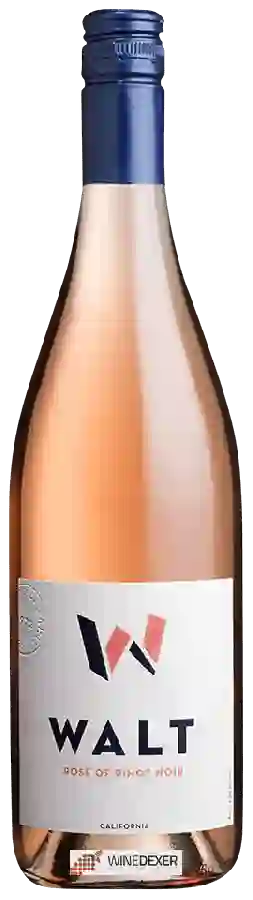
Winery WaltPinot Noir Rosé
 Pink wine


This wine generally goes well with pork, poultry or veal.

Wine flavors and olphactive analysis



On the nose the Pinot Noir Rosé of Winery Walt in the region of California often reveals types of flavors of earth, tree fruit or citrus fruit and sometimes also flavors of red fruit.
Food and wine pairings with Pinot Noir Rosé
Pairings that work perfectly with Pinot Noir Rosé



Original food and wine pairings with Pinot Noir Rosé


The Pinot Noir Rosé of Winery Walt matches generally quite well with dishes of veal, pork or game (deer, venison) such as recipes of capon stuffed with morels, sauerkraut (with tips so to do!!!) or duck and peach brochettes.
Details and technical informations about Winery Walt's Pinot Noir Rosé.
Discover the grape variety: Pinot noir
Elegant reds, light in colour with silky tannins, showing strawberry, cherry and raspberry aromas, evolving to forest floor, mushroom and spice with age. Fresh acidity, delicate finish. Star of the Côte d'Or (Romanée-Conti, Chambertin, Volnay), pillar of Champagne (Blanc de Noirs) and signature of Oregon, Central Otago and Sonoma Coast. An early-ripening Burgundian variety, one of the world's greatest.
Last vintages of this wine

The best vintages of Pinot Noir Rosé from Winery Walt are 2019, 2017, 2018, 0 and 2016.
Informations about the Winery Walt
The Winery Walt is one of of the world's great estates. It offers 24 wines for sale in the of California to come and discover on site or to buy online.

The wine region of California
Powerful, sunny reds: dense Napa Cabernet Sauvignon (blackcurrant, chocolate, tobacco, ample tannins), spicy, jammy Zinfandel from the Sierra Foothills, silky red-fruited Pinot Noir on the cool coast (Sonoma, Russian River, Central Coast). Opulent, buttery Chardonnay, notes of yellow fruit and vanilla. Varied climate, from the hot interior to the Pacific-cooled coast. 80% of US production, 139 AVAs including Napa (1st AVA, 1981).
The word of the wine: Sulphur
An antiseptic and antioxidant substance known since antiquity, probably already used by the Romans. But it was only in modern times that its use was rediscovered. It will allow a better conservation of the wine and thus favour its export. Sulphur also gave the 18th century winegrower the possibility of extending the maceration period without fearing that the wine would turn sour and thus go from dark rosé wines to the red wines of today. Excessive sulphur, on the other hand, kills happiness, paralysing the aromas and causing headaches.


