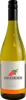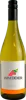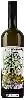
Winery Vincenz RichterMeissner Spaargebirge Weissburgunder Spätlese Trocken
 White wine
In the mouth this white wine is a with a nice freshness.
This wine generally goes well with rich fish (salmon, tuna etc), shellfish or mild and soft cheese.
Taste structure of the Meissner Spaargebirge Weissburgunder Spätlese Trocken from the Winery Vincenz Richter
Light | Bold | |
Dry | Sweet | |
Soft | Acidic |
In the mouth the Meissner Spaargebirge Weissburgunder Spätlese Trocken of Winery Vincenz Richter in the region of Sachsen is a with a nice freshness.
Food and wine pairings with Meissner Spaargebirge Weissburgunder Spätlese Trocken
Pairings that work perfectly with Meissner Spaargebirge Weissburgunder Spätlese Trocken



Original food and wine pairings with Meissner Spaargebirge Weissburgunder Spätlese Trocken

The Meissner Spaargebirge Weissburgunder Spätlese Trocken of Winery Vincenz Richter matches generally quite well with dishes of rich fish (salmon, tuna etc), shellfish or mild and soft cheese such as recipes of sea bream in foil on the barbecue, real swiss fondue or the tartiflette wrap.
Details and technical informations about Winery Vincenz Richter's Meissner Spaargebirge Weissburgunder Spätlese Trocken.
Discover the grape variety: Camaraou
It has been cultivated for a long time in Bearn and in the Jurançonnais. Today, it is very little multiplied and therefore in danger of disappearing. Published genetic analyses have made it possible to discover that it is related to one or more grape varieties, including Savagnin. For more information, click here!
Informations about the Winery Vincenz Richter
The Winery Vincenz Richter is one of of the world's great estates. It offers 32 wines for sale in the of Sachsen to come and discover on site or to buy online.

The wine region of Sachsen
Sachsen (Saxony) in eastern Germany is one of the world's Northernmost wine regions, located at a latitude of 51 degrees north. The roughly 493 hectares (1,218ac) of vines in the region are planted aLong a 25 mile (40km) stretch of the Elbe river valley, from Pillnitz near the city of Dresden, in a north-easterly direction to Diesbar-Seusslitz, just downstream of the city of Meissen. Despite its northerly location, Sachsen has a long history of viticulture, with the earliest documents of wine-growing around Meissen dating to 1161. Since Germany's reunification in 1990, great enthusiasm has gone into building and developing the Sachsen wine industry; there are many part-time growers and an enthusiastic local market.
The word of the wine: Green
Said of a wine that is too acidic or marked by unpleasant vegetal tastes.