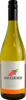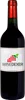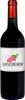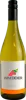
Winery Vincent LegouBourgogne Passetoutgrains
 Red wine
This wine generally goes well with poultry, beef or veal.
Food and wine pairings with Bourgogne Passetoutgrains
Pairings that work perfectly with Bourgogne Passetoutgrains



Original food and wine pairings with Bourgogne Passetoutgrains

The Bourgogne Passetoutgrains of Winery Vincent Legou matches generally quite well with dishes of beef, veal or game (deer, venison) such as recipes of roast beef with caramelized onion, calf sweetbread with mushrooms or wild boar bourguignon.
Details and technical informations about Winery Vincent Legou's Bourgogne Passetoutgrains.
Discover the grape variety: Picolit blanc
A very old grape variety, probably already known to the Romans, and most certainly of Italian origin, from Friuli to be precise. The Hungarian Keknyelu is said to be the same variety, but this remains to be confirmed. It is almost unknown in France and even in the wine world, perhaps because of its low production and its sensitivity to various diseases. It should be noted that it is not related to the black picolit.
Informations about the Winery Vincent Legou
The Winery Vincent Legou is one of wineries to follow in Bourgogne Passe-tout-grains.. It offers 18 wines for sale in the of Bourgogne Passe-tout-grains to come and discover on site or to buy online.

The wine region of Bourgogne Passe-tout-grains
The Bourgogne Passe-tout-grains rouge is a Dry red wine. It falls into the category of still wine. It is produced in the Vineyards of Burgundy, in the east of France and more precisely in the wine regions of Chablis, Côte de nuits, Côte de Beaune, Côte Chalonnaise and Mâcon. Administratively, it can be produced in the departments of Côte-d'Or, Yonne, Saône-et-Loire and Rhône.
The wine region of Burgundy
Bourgogne is the catch-all regional appellation title of the Burgundy wine region in eastern France ("Bourgogne" is the French name for Burgundy). Burgundy has a Complex and comprehensive appellation system; counting Premier Cru and Grand Cru titles, the region has over 700 appellation titles for its wines. Thus, Burgundy wines often come from one Vineyard (or several separate vineyards) without an appellation title specific to the region, Village or even vineyard. A standard Burgundy wine may be made from grapes grown in one or more of Burgundy's 300 communes.
The word of the wine: Performance
Quantity of grapes harvested per hectare. In AOC, the average yield is limited on the proposal of the appellation syndicate, validated by the Inao. The use of high-performance plant material (especially clones) and better control of vine diseases have increased yields. This is not without consequences on the quality of the wines (dilution) and on the state of the market (too much wine). We must not over-simplify: low yields are not synonymous with quality, and it is often in years with generous harvests that we find the greatest vintages (1982 and 1986 in Bordeaux, 1996 in Champagne, 1990 and 2005 in Burgundy...).