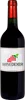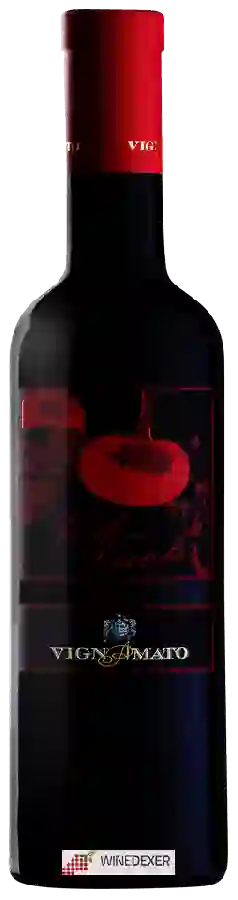
Winery VignamatoVi de Visciola
 Red wine


In the mouth this red wine is a with a nice freshness.
This wine generally goes well with poultry, beef or veal.

Taste structure of the Vi de Visciola from the Winery Vignamato
Light | Bold | |
Smooth | Tannic | |
Dry | Sweet | |
Soft | Acidic |
In the mouth the Vi de Visciola of Winery Vignamato in the region of Marche is a with a nice freshness.
Wine flavors and olphactive analysis


On the nose the Vi de Visciola of Winery Vignamato in the region of Marche often reveals types of flavors of oak, red fruit.
Food and wine pairings with Vi de Visciola
Pairings that work perfectly with Vi de Visciola



Original food and wine pairings with Vi de Visciola

The Vi de Visciola of Winery Vignamato matches generally quite well with dishes of beef, pasta or veal such as recipes of cicadas at the chib, meat and goat pie or pork tenderloin with chorizo and peppers.
Details and technical informations about Winery Vignamato's Vi de Visciola.
Discover the grape variety: Sangiovese
Firm, upright reds with precise acidity and angular tannins, showing aromas of sour cherry, plum, dried herbs, leather, black tea and balsamic notes. Characteristically bitter, savoury finish. Star of Chianti Classico DOCG, Brunello di Montalcino DOCG, Vino Nobile di Montepulciano DOCG and Morellino di Scansano. Italy's most planted variety, a descendant of Ciliegiolo × Calabrese di Montenuovo.
Last vintages of this wine
The best vintages of Vi de Visciola from Winery Vignamato are 0
Informations about the Winery Vignamato
The Winery Vignamato is one of of the world's greatest estates. It offers 18 wines for sale in the of Marche to come and discover on site or to buy online.

The wine region of Marche
Italian star of Verdicchio: exceptional age-worthy whites, straight and mineral with signature notes of green almond, lemon, green apple, dry herbs and a slightly bitter finish. Two DOCGs: Castelli di Jesi (coastal, airy) and Matelica (inland, more concentrated). Mediterranean reds: fleshy Montepulciano in Rosso Conero near Ancona, supple Sangiovese. Also fresh Pecorino and Passerina.
The word of the wine: Chaptalization
The addition of sugar at the time of fermentation of the must, an ancient practice, but theorized by Jean-Antoine Chaptal at the dawn of the 19th century. The sugar is transformed into alcohol and allows the natural degree of the wine to be raised in a weak or cold year, or - more questionably - when the winegrower has a harvest that is too large to obtain good maturity.