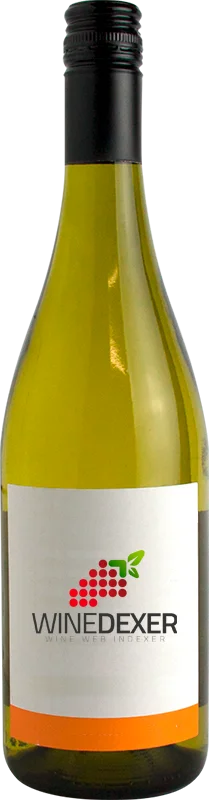
Winery Vignali RoccamoraCa de iò Bianco
 White wine


In the mouth this white wine is a powerful.
This wine generally goes well with vegetarian, appetizers and snacks or shellfish.

Taste structure of the Ca de iò Bianco from the Winery Vignali Roccamora
Light | Bold | |
Dry | Sweet | |
Soft | Acidic |
In the mouth the Ca de iò Bianco of Winery Vignali Roccamora in the region of Sicily is a powerful.
Food and wine pairings with Ca de iò Bianco
Pairings that work perfectly with Ca de iò Bianco



Original food and wine pairings with Ca de iò Bianco
The Ca de iò Bianco of Winery Vignali Roccamora matches generally quite well with dishes of shellfish, vegetarian or appetizers and snacks such as recipes of slivers of squid with tomato, leek, goat cheese and bacon quiche or pizza-style appetizer croissants.
Details and technical informations about Winery Vignali Roccamora's Ca de iò Bianco.
Discover the grape variety: Sweet Sapphire
Seedless (pip-free) table grape with long clusters and very elongated cylindrical blue-black berries with thin skin and crunchy flesh, sweet and fresh on the palate. Grown in California, China and Spain for export markets, prized for its striking elongated shape that catches the eye at premium counters. American black seedless table grape variety bred for fresh consumption.
Last vintages of this wine

The best vintages of Ca de iò Bianco from Winery Vignali Roccamora are 2014, 0
Informations about the Winery Vignali Roccamora
The Winery Vignali Roccamora is one of of the world's great estates. It offers 28 wines for sale in the of Sicily to come and discover on site or to buy online.

The wine region of Sicily
Major qualitative renewal. Sunny, expressive reds: fleshy, spicy Nero d'Avola (black cherry, blackberry, liquorice), fine, mineral Nerello Mascalese on Etna (recalls Pinot Noir), light, crisp Frappato in Cerasuolo di Vittoria DOCG. Lively, saline whites: Catarratto, fat, iodised Grillo, taut Carricante, floral Inzolia. Amber, walnutty fortified Marsala.
The word of the wine: Residual sugars
Sugars not transformed into alcohol and naturally present in the wine. The perception of residual sugars is conditioned by the acidity of the wine. The more acidic the wine is, the less sweet it will seem, given the same amount of sugar.