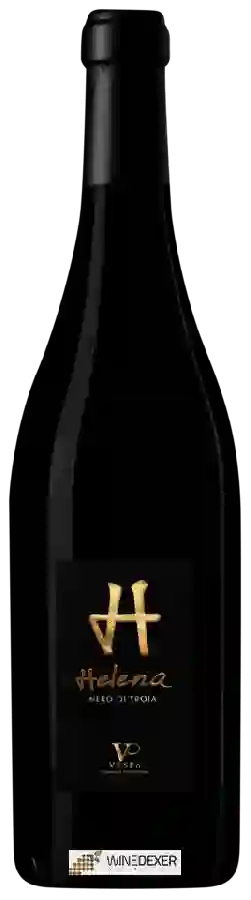
Winery VespaHelena Nero di Troia
 Red wine


In the mouth this red wine is a powerful with a lot of tannins present in the mouth.
This wine generally goes well with beef, lamb or pasta.

Taste structure of the Helena Nero di Troia from the Winery Vespa
Light | Bold | |
Smooth | Tannic | |
Dry | Sweet | |
Soft | Acidic |
In the mouth the Helena Nero di Troia of Winery Vespa in the region of Puglia is a powerful with a lot of tannins present in the mouth.
Wine flavors and olphactive analysis


On the nose the Helena Nero di Troia of Winery Vespa in the region of Puglia often reveals types of flavors of non oak, earth or oak and sometimes also flavors of red fruit.
Food and wine pairings with Helena Nero di Troia
Pairings that work perfectly with Helena Nero di Troia



Original food and wine pairings with Helena Nero di Troia
The Helena Nero di Troia of Winery Vespa matches generally quite well with dishes of beef, pasta or lamb such as recipes of sloth pork loin, tagliatelle with seafood and saffron cream or moroccan tagine with lamb and cardoons.
Details and technical informations about Winery Vespa's Helena Nero di Troia.
Discover the grape variety: Würzer
Aromatic, spiced whites best enjoyed young, with a pale golden robe, an ample palate with moderate acidity, and signature muscat, rose, lychee, exotic fruit aromas and Gewürztraminer-like notes. Also in off-dry characterful styles. Grown in Germany and the United Kingdom for dry and off-dry aromatic whites. German white grape obtained in 1932 in Alzey by Georg Scheu (Gewürztraminer × Müller-Thurgau).
Last vintages of this wine
The best vintages of Helena Nero di Troia from Winery Vespa are 2014, 0, 2015
Informations about the Winery Vespa
The Winery Vespa is one of of the world's greatest estates. It offers 16 wines for sale in the of Puglia to come and discover on site or to buy online.

The wine region of Puglia
Heel of the boot, 80% red vineyard, sunny and generous. Fleshy, jammy Primitivo (= Zinfandel) with notes of black cherry, plum, chocolate and spices, powerful alcohol and melted tannins, a star in Primitivo di Manduria. Deep, structured Negroamaro (black-bitter) with a bitter finish in Salice Salentino. Structured Nero di Troia, spicy Susumaniello.
The word of the wine: Botrytis
Fungus that causes grape rot.