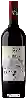
Château VeduLussac Saint-Émilion
 Red wine



In the mouth this red wine is a powerful with a nice balance between acidity and tannins.
This wine generally goes well with poultry, beef or game (deer, venison).
Taste structure of the Lussac Saint-Émilion from the Château Vedu
Light | Bold | |
Smooth | Tannic | |
Dry | Sweet | |
Soft | Acidic |
In the mouth the Lussac Saint-Émilion of Château Vedu in the region of Bordeaux is a powerful with a nice balance between acidity and tannins.
Food and wine pairings with Lussac Saint-Émilion
Pairings that work perfectly with Lussac Saint-Émilion



Original food and wine pairings with Lussac Saint-Émilion

The Lussac Saint-Émilion of Château Vedu matches generally quite well with dishes of beef, lamb or game (deer, venison) such as recipes of roast beef with caramelized onion, baked lamb neck on a bed of vegetables and grapes or real paella recipe from valencia.
Details and technical informations about Château Vedu's Lussac Saint-Émilion.
Discover the grape variety: Arbois
Arbois is a white grape variety of French origin, in Touraine. Its name comes from orboué, a local patois word. It is recommended in the departments of Indre, Indre-et-Vallée de la Loire, Loir-et-Cher, Vallée de la Loiret, Deux-Sèvres and Vienne, and is listed as a grape variety in the Touraine, Touraine Sparkling, Cheverny and Valencay AOCs. Arbois is not widely cultivated in France, covering about 650 hectares, 600 of which are in the Loir-et-Cher region. It is a vigorous variety, but moderately productive (40 to 80 hectoliters per hectare). It is part of the grape varieties used for Vouvray, Crémant de la Loire Valley, Cheverny and Valençay wines. It gives a wine with little acidity, dry, fresh and supple. It is mainly used in blending. This grape variety from the Centre region should not be confused with the vineyard and wine of Arbois, in the Jura.
Informations about the Château Vedu
The Château Vedu is one of of the world's greatest estates. It offers 1 wines for sale in the of Lussac-Saint-Émilion to come and discover on site or to buy online.

The wine region of Lussac-Saint-Émilion
The wine region of Lussac-Saint-Émilion is located in the region of Saint-Émilion of Bordeaux of France. Wineries and vineyards like the Château de Roques or the Domaine Gérard Depardieu produce mainly wines red, white and pink. The most planted grape varieties in the region of Lussac-Saint-Émilion are Merlot, Cabernet-Sauvignon and Cabernet franc, they are then used in wines in blends or as a single variety. On the nose of Lussac-Saint-Émilion often reveals types of flavors of cherry, jam or eucalyptus and sometimes also flavors of violet, forest floor or aniseed.
The wine region of Bordeaux
Bordeaux, in southwestern France, is one of the most famous, prestigious and prolific wine regions in the world. The majority of Bordeaux wines (nearly 90% of the production Volume) are the Dry, medium and Full-bodied red Bordeaux blends for which it is famous. The finest (and most expensive) are the wines of the great châteaux of Haut-Médoc and the right bank appellations of Saint-Émilion and Pomerol. The former focuses (at the highest level) on Cabernet Sauvignon, the latter on Merlot.
The word of the wine: Viscosity
Consistency of wine reminiscent of the tactile sensation of sugar syrup with varying degrees of fluidity, due to the alcohol and natural sugar in the grapes present in sweet wines. In excess, this sensation can make the wine pasty and heavy. To the eye, viscosity is referred to as tears.