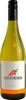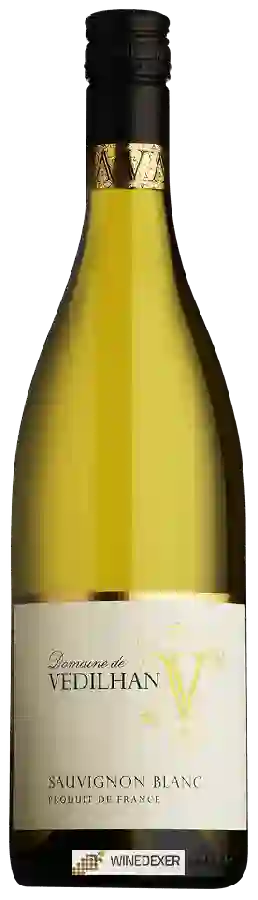
Domaine de VedilhanSauvignon Blanc
 White wine



In the mouth this white wine is a .
This wine generally goes well with vegetarian, poultry or lean fish.

Taste structure of the Sauvignon Blanc from the Domaine de Vedilhan
Light | Bold | |
Dry | Sweet | |
Soft | Acidic |
In the mouth the Sauvignon Blanc of Domaine de Vedilhan in the region of Languedoc-Roussillon is a .
Food and wine pairings with Sauvignon Blanc
Pairings that work perfectly with Sauvignon Blanc



Original food and wine pairings with Sauvignon Blanc


The Sauvignon Blanc of Domaine de Vedilhan matches generally quite well with dishes of pasta, vegetarian or poultry such as recipes of pasta with chicken, peppers and mushrooms, quiche with bacon and gruyère cheese or ham and cheese cake.
Details and technical informations about Domaine de Vedilhan's Sauvignon Blanc.
Discover the grape variety: Négret de Banhars
Light, fruity reds with a clear ruby colour, silky tannins and supple palate, showing simple aromas of red fruits (cherry, raspberry) and gentle spices. Airy profile, now almost extinct. Preserved in INRAE varietal collections, it is a witness to the pre-phylloxera ampelographic diversity of south-west France. Rare French black variety native to the south-west, studied for its patrimonial genetic interest among ancient cultivars.
Last vintages of this wine
The best vintages of Sauvignon Blanc from Domaine de Vedilhan are 2018, 2016, 2014, 2010
Informations about the Domaine de Vedilhan
The Domaine de Vedilhan is one of of the world's greatest estates. It offers 12 wines for sale in the of Languedoc-Roussillon to come and discover on site or to buy online.

The wine region of Languedoc-Roussillon
Largest single French vineyard, dominated by sunny, generous reds. Spicy Syrah, candied Grenache (ripe fruit, garrigue), structured Carignan, deep Mourvèdre, supple Cinsault. Stars: structured Corbières, Minervois, Faugères, Saint-Chinian; round Côtes-du-Roussillon. Legendary vins doux naturels: Banyuls and Maury (fortified Grenache) with notes of cocoa, fig, prune.
The word of the wine: Cuvée prestige (champagne)
Vintage or not, it is composed of a selection of terroirs and generally comes from the first press after eliminating the very first juices that come out of the press. The best known? Dom Pérignon, Cristal de Roederer, Grand Siècle de Laurent-Perrie, Louise at Pommery. In fact, all the houses and most of the independent winegrowers have their own prestige cuvee.