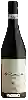
Winery VaudanoMoscato
 White wine



In the mouth this white wine is a powerful.
This wine generally goes well with lean fish, shellfish or mature and hard cheese.

Taste structure of the Moscato from the Winery Vaudano
Light | Bold | |
Dry | Sweet | |
Soft | Acidic |
In the mouth the Moscato of Winery Vaudano in the region of Piedmont is a powerful.
Food and wine pairings with Moscato
Pairings that work perfectly with Moscato



Original food and wine pairings with Moscato


The Moscato of Winery Vaudano matches generally quite well with dishes of pasta, shellfish or mature and hard cheese such as recipes of tagliatelle with foie gras, chinese fondue or onion and comté pie.
Details and technical informations about Winery Vaudano's Moscato.
Discover the grape variety: Monbadon
Simple, lively dry whites with a pale golden robe, a lean palate and crisp acidity, with unassuming aromas of citrus, white flowers and herbal notes. Neutral, acidic profile mainly used for distillation. A traditional component of Cognac AOC blends, contributing to the aromatic identity of Charentais brandy. Native French white grape from the South-West, mainly grown in the Charente.
Last vintages of this wine
The best vintages of Moscato from Winery Vaudano are 0
Informations about the Winery Vaudano
The Winery Vaudano is one of of the world's great estates. It offers 27 wines for sale in the of Piedmont to come and discover on site or to buy online.

The wine region of Piedmont
Kingdom of Nebbiolo: Barolo and Barbaresco DOCG, long-ageing reds with firm tannins and lively acidity, complex aromas of withered rose, sour cherry, tar, truffle and undergrowth. More accessible, tangy Barbera on red fruit, supple, crisp Dolcetto. Sweet, floral sparkling Moscato d'Asti, mineral, lemony Gavi (Cortese) white, round, almondy Arneis from Roero. 50,000 ha across the Langhe, Roero and Monferrato, UNESCO.
The word of the wine: Wooded
A set of aromas brought about by ageing in barrels (usually oak). This can be pleasant when, in small doses, it brings a touch of spice, roast or vanilla to an already constructed ensemble. When the violent woodiness dominates the wine, it is quickly tiring. Easily identifiable aromatically, it is sought after (to the point of abuse) by the makers of coarse wines. New World manufacturers and, alas, some French winemakers use oak chips to impart the woody taste, which is tantamount to artificial flavoring.