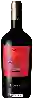
Winery TrevisanaRefosco
 Red wine
In the mouth this red wine is a powerful.
This wine generally goes well with beef, game (deer, venison) or lamb.
Taste structure of the Refosco from the Winery Trevisana
Light | Bold | |
Smooth | Tannic | |
Dry | Sweet | |
Soft | Acidic |
In the mouth the Refosco of Winery Trevisana in the region of Veneto is a powerful.
Food and wine pairings with Refosco
Pairings that work perfectly with Refosco



Original food and wine pairings with Refosco

The Refosco of Winery Trevisana matches generally quite well with dishes of beef, pasta or lamb such as recipes of fondue vigneronne au vin rouge, pasta with tuna and tomato sauce or mansaf, or jordanian lamb (jordan).
Details and technical informations about Winery Trevisana's Refosco.
Discover the grape variety: Petit Bouschet
Crossbreeding carried out in 1829 by Louis Bouschet de Bernard (father of Henri Bouschet, also known for his numerous varieties) between the aramon and the teinturier. It was practically multiplied all over the world. Today, it is an extinct grape variety and can only be found in a few private or public collections and conservatories.
Informations about the Winery Trevisana
The Winery Trevisana is one of of the world's greatest estates. It offers 18 wines for sale in the of Veneto to come and discover on site or to buy online.

The wine region of Veneto
Veneto is an important and growing wine region in northeastern Italy. Veneto is administratively Part of the Triveneto area, aLong with its smaller neighbors, Trentino-Alto Adige and Friuli-Venezia Giulia. In terms of geography, culture and wine styles, it represents a transition from the Alpine and Germanic-Slavic end of Italy to the warmer, drier, more Roman lands to the South. Veneto is slightly smaller than the other major Italian wine regions - Piedmont, Tuscany, Lombardy, Puglia and Sicily - but it produces more wine than any of them.
The word of the wine: Douçâtre
Soft wine with a dominant sweetness at the expense of freshness.