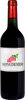
Winery Tenuta La RattaN.6 Rosso Fermo
 Red wine



In the mouth this red wine is a powerful.
This wine generally goes well with beef, game (deer, venison) or lamb.
Taste structure of the N.6 Rosso Fermo from the Winery Tenuta La Ratta
Light | Bold | |
Smooth | Tannic | |
Dry | Sweet | |
Soft | Acidic |
In the mouth the N.6 Rosso Fermo of Winery Tenuta La Ratta in the region of Emilia-Romagna is a powerful.
Food and wine pairings with N.6 Rosso Fermo
Pairings that work perfectly with N.6 Rosso Fermo



Original food and wine pairings with N.6 Rosso Fermo

The N.6 Rosso Fermo of Winery Tenuta La Ratta matches generally quite well with dishes of beef, pasta or lamb such as recipes of roast pork with pineapple, pasta with porcini mushrooms or giouvetsi (greek dish).
Details and technical informations about Winery Tenuta La Ratta's N.6 Rosso Fermo.
Discover the grape variety: Reine des vignes
Obtained in Hungary in 1916 by Jean (Janos) Mathiasz by crossing the Beirut date tree with the Csaba pearl. This variety is nowadays very little multiplied, but it is registered in the Official Catalogue of table grape varieties list A1.
Last vintages of this wine
The best vintages of N.6 Rosso Fermo from Winery Tenuta La Ratta are 2008, 0
Informations about the Winery Tenuta La Ratta
The Winery Tenuta La Ratta is one of of the world's greatest estates. It offers 16 wines for sale in the of Emilia-Romagna to come and discover on site or to buy online.

The wine region of Emilia-Romagna
Romagna/emilia">Emilia-Romagna is a Rich and fertile region in Northern Italy, and one of the country's most prolific wine-producing regions, with over 58,000 hectares (143,320 acres) of vines in 2010. It is 240 kilometers (150 miles) wide and stretches across almost the entire northern Italian peninsula, sandwiched between Tuscany to the South, Lombardy and Veneto to the north and the Adriatic Sea to the east. Nine miles of Liguria is all that separates Emilia-Romagna from the Ligurian Sea, and its uniqueness as the only Italian region with both an east and west coast. Emilia-Romagna's wine-growing heritage dates back to the seventh century BC, making it one of the oldest wine-growing regions in Italy.
The word of the wine: INAO
National Institute of Origin and Quality. French organization depending on the Ministry of Agriculture and in charge of quality signs: AOC, IGP, labels and organic farming.