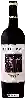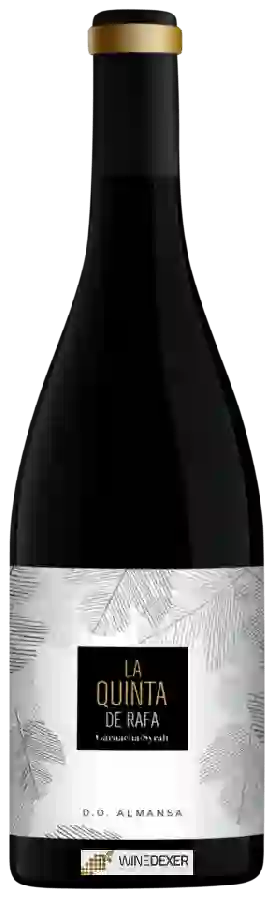
Winery VolverLa Quinta de Rafa
 Red wine



In the mouth this red wine is a powerful.
This wine generally goes well with poultry, beef or veal.

Taste structure of the La Quinta de Rafa from the Winery Volver
Light | Bold | |
Smooth | Tannic | |
Dry | Sweet | |
Soft | Acidic |
In the mouth the La Quinta de Rafa of Winery Volver in the region of Castille is a powerful.
Food and wine pairings with La Quinta de Rafa
Pairings that work perfectly with La Quinta de Rafa



Original food and wine pairings with La Quinta de Rafa

The La Quinta de Rafa of Winery Volver matches generally quite well with dishes of beef, pasta or veal such as recipes of beef and spice stuffed peppers, leek and salmon lasagna or pork tenderloin with onions.
Details and technical informations about Winery Volver's La Quinta de Rafa.
Discover the grape variety: Genovèse
Simple, fresh dry whites with a pale golden colour, a supple palate and preserved acidity, showing undemonstrative aromas of citrus (lemon), white flowers and Mediterranean herbal notes. Rustic, airy profile to drink young. Preserved for its heritage value in a few confidential plots in Provence and Corsica, among the ancient varieties under study. Native white variety from south-east France, almost extinct since phylloxera.
Last vintages of this wine
The best vintages of La Quinta de Rafa from Winery Volver are 0, 2019
Informations about the Winery Volver
The Winery Volver is one of of the world's great estates. It offers 69 wines for sale in the of Almansa to come and discover on site or to buy online.

The wine region of Almansa
Castilla-La Mancha DOP southeast of Albacete, high-altitude vineyards (700-1,000 m) on limestone, dry continental climate. Signature Garnacha Tintorera as ruling red (~60%, Alicante Bouschet, red pulp): dark and fruity with blackberry, candied cherry, plum, violet, garrigue, leather and spice, round tannins and meaty palate. Dense, fresh Monastrell thanks to altitude (blackberry, kirsch, garrigue). Supple Tempranillo, peppery Syrah.
The wine region of Castille
Cradle of great Castilian reds, high-altitude plateaus (450-1000 m) along the Duero. Tempranillo king (aka Tinta de Toro, Tinto Fino): powerful, concentrated, structured reds with notes of black cherry, plum, leather, tobacco and spice, firm tannins from altitude and cool nights. Stars: Ribera del Duero (Vega Sicilia, Pingus), fleshy Toro, Bierzo (floral, mineral Mencía). Lively, herbaceous Verdejo whites from Rueda.
The word of the wine: Bâtonnage
A very old technique that has come back into fashion in modern oenology, which consists of shaking the white wine in the barrels at the end of fermentation, or after fermentation, with a stick or a flail, in order to suspend the fine lees composed of yeasts at the end of their activity. This process is sometimes used for red wines.