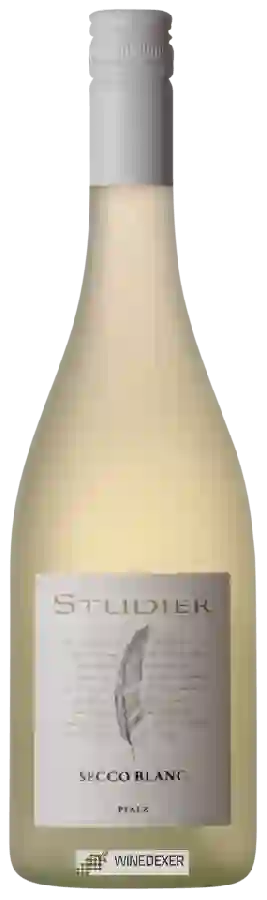
Winery StudierSecco Blanc Trocken
 White wine
This wine is a blend of 2 varietals which are the Chardonnay and the Riesling.
This wine generally goes well with pork, vegetarian or poultry.

Food and wine pairings with Secco Blanc Trocken
Pairings that work perfectly with Secco Blanc Trocken



Original food and wine pairings with Secco Blanc Trocken



The Secco Blanc Trocken of Winery Studier matches generally quite well with dishes of pork, rich fish (salmon, tuna etc) or shellfish such as recipes of rabbit stew the old fashioned way, tuna pie or gari (cassava flour) with shrimps (africa).
Details and technical informations about Winery Studier's Secco Blanc Trocken.
Discover the grape variety: Chardonnay
Whites with many faces: mineral and taut at Chablis (lemon, green apple, flint), opulent and buttery at Meursault and Puligny-Montrachet (hazelnut, brioche, yellow fruits), tense and chalky in Champagne (Blanc de Blancs). Also vinified sparkling and widely exported (Sonoma, Margaret River, Casablanca). A Burgundian variety, a cross of Pinot Noir × Gouais Blanc, half-sibling of Aligoté.
Informations about the Winery Studier
The Winery Studier is one of of the world's great estates. It offers 59 wines for sale in the of Pfalz to come and discover on site or to buy online.

The wine region of Pfalz
Fleshy, dry, fruity Riesling is the region's signature: yellow peach, apricot, ripe citrus, lovely mineral tension. Germany's largest red-wine area (40%), with silky Spätburgunder showing red fruit and spice, darker structured Dornfelder, supple Portugieser. Some rounded Pinot Blanc and Pinot Gris. A 23,640 ha vineyard along the Haardt, among Germany's warmest (>2,000 h of sun).
The word of the wine: Attack
First impressions perceived after the wine is put in the mouth.