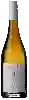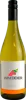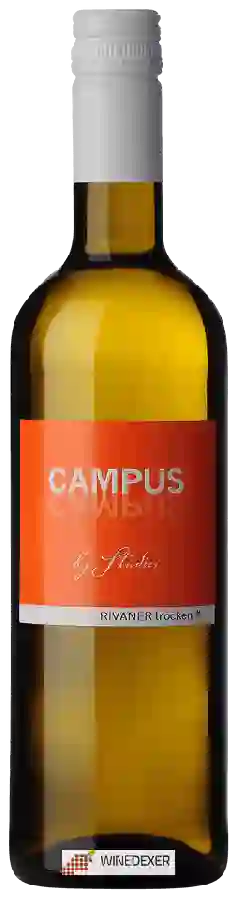
Winery StudierCampus Rivaner Trocken
 White wine



In the mouth this white wine is a .
This wine generally goes well with vegetarian, appetizers and snacks or lean fish.

Taste structure of the Campus Rivaner Trocken from the Winery Studier
Light | Bold | |
Dry | Sweet | |
Soft | Acidic |
In the mouth the Campus Rivaner Trocken of Winery Studier in the region of Pfalz is a .
Food and wine pairings with Campus Rivaner Trocken
Pairings that work perfectly with Campus Rivaner Trocken



Original food and wine pairings with Campus Rivaner Trocken


The Campus Rivaner Trocken of Winery Studier matches generally quite well with dishes of shellfish, spicy food or vegetarian such as recipes of mussels with chicken, mullet with onions and white wine or quiche with bacon and gruyère cheese.
Details and technical informations about Winery Studier's Campus Rivaner Trocken.
Discover the grape variety: Oeillade noire
Light and fruity reds with a pale, lightly coloured ruby robe, smooth tannins, an airy palate with moderate acidity, and aromas of red fruits (strawberry, raspberry), soft spices and floral notes. Accessible southern profile. Preserved for its heritage value, surviving in a few southern French plots; studied for its ampelographic interest. Native French black variety from Provence and Languedoc, identical to Cinsault according to some analyses.
Last vintages of this wine
The best vintages of Campus Rivaner Trocken from Winery Studier are 2016, 0
Informations about the Winery Studier
The Winery Studier is one of of the world's great estates. It offers 59 wines for sale in the of Pfalz to come and discover on site or to buy online.

The wine region of Pfalz
Fleshy, dry, fruity Riesling is the region's signature: yellow peach, apricot, ripe citrus, lovely mineral tension. Germany's largest red-wine area (40%), with silky Spätburgunder showing red fruit and spice, darker structured Dornfelder, supple Portugieser. Some rounded Pinot Blanc and Pinot Gris. A 23,640 ha vineyard along the Haardt, among Germany's warmest (>2,000 h of sun).
The word of the wine: SGN
Selection of noble grains. Appellation reserved for a type of sweet wine produced in Alsace.