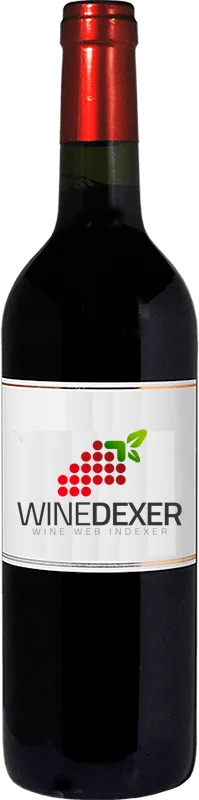
Winery StubitsReihburg
 Red wine
In the mouth this red wine is a powerful with a nice balance between acidity and tannins.
This wine generally goes well with poultry, beef or pasta.

Taste structure of the Reihburg from the Winery Stubits
Light | Bold | |
Smooth | Tannic | |
Dry | Sweet | |
Soft | Acidic |
In the mouth the Reihburg of Winery Stubits in the region of Weinland is a powerful with a nice balance between acidity and tannins.
Food and wine pairings with Reihburg
Pairings that work perfectly with Reihburg



Original food and wine pairings with Reihburg
The Reihburg of Winery Stubits matches generally quite well with dishes of beef, pasta or poultry such as recipes of daube niçoise, pasta with pistou or cantonese rice.
Details and technical informations about Winery Stubits's Reihburg.
Discover the grape variety: Oliver Irsay
Aromatic, fine whites best enjoyed young, with a pale golden robe, an airy palate with moderate acidity, and signature aromas of muscat, rose, peach, lychee and delicate floral notes. Early-ripening aromatic profile. Grown in Hungary, Slovakia and the Czech Republic for accessible dry and off-dry aromatic wines. Hungarian white grape obtained in 1930 by Pál Kocsis (Pozsonyi fehér × Pearl of Csaba).
Informations about the Winery Stubits
The Winery Stubits is one of of the world's greatest estates. It offers 9 wines for sale in the of Südburgenland to come and discover on site or to buy online.

The wine region of Südburgenland
Southernmost region of Burgenland (Austria): signature Blaufränkisch as red king — deep robe with signature notes of wild berries, blackberry, black cherry, spices and a peppery touch, finely bitter sometimes ethereal, signature notable acidity and biting tannins evolving velvety with maturation, more refined and delicate than Mittelburgenland on signature sandy soils. Eisenberg DAC flagship. Late thick-skinned variety, dense structure and exceptional ageing.
The wine region of Weinland
Vast German-speaking region in north-eastern Switzerland, the country's largest production area. Signature Pinot Noir (Blauburgunder): fine, fresh reds with notes of cherry, raspberry, undergrowth and sweet spices, silky tannins. Elegant, delicate style, often barrel-aged. Also light, floral Müller-Thurgau (Riesling-Sylvaner), lively, lemony native Räuschling, ample Pinot Gris.
The word of the wine: Performance
Quantity of grapes harvested per hectare. In AOC, the average yield is limited on the proposal of the appellation syndicate, validated by the Inao. The use of high-performance plant material (especially clones) and better control of vine diseases have increased yields. This is not without consequences on the quality of the wines (dilution) and on the state of the market (too much wine). We must not over-simplify: low yields are not synonymous with quality, and it is often in years with generous harvests that we find the greatest vintages (1982 and 1986 in Bordeaux, 1996 in Champagne, 1990 and 2005 in Burgundy...).