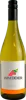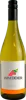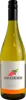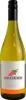
Winery SteinDornfelder
 Red wine
In the mouth this red wine is a .
This wine generally goes well with pork, poultry or veal.
Taste structure of the Dornfelder from the Winery Stein
Light | Bold | |
Smooth | Tannic | |
Dry | Sweet | |
Soft | Acidic |
In the mouth the Dornfelder of Winery Stein in the region of Nahe is a .
Food and wine pairings with Dornfelder
Pairings that work perfectly with Dornfelder



Original food and wine pairings with Dornfelder

The Dornfelder of Winery Stein matches generally quite well with dishes of pasta, veal or pork such as recipes of shrimp marinade, vital tone / vitello tonnato (italy) or caramelized pork ribs.
Details and technical informations about Winery Stein's Dornfelder.
Discover the grape variety: Dornfelder
German, intraspecific cross made in 1955 by August Karl Herold (1902-1973) between the helfensteiner and the heroldrebe (more details, click here!). With these same parents he also obtained the hegel. The Dornfelder can be found in Switzerland, United Kingdom, Belgium, Germany, Austria, Czech Republic, Canada, United States, ... . Virtually unknown in France, we nevertheless recognize a certain interest in it due to its short phenological cycle and the quality of its wines, both rosé and red.
Informations about the Winery Stein
The Winery Stein is one of of the world's greatest estates. It offers 30 wines for sale in the of Nahe to come and discover on site or to buy online.

The wine region of Nahe
Nahe is one of the smaller German wine regions, named after the Nahe river which joins the Rhein at Rheinhessen/bingen">Bingen. The viticultural carea here is characterised by dramatic topography with steep slopes and craggy outcrops of metamorphic rock. Like most of the regions on or near the Rhine, its most prestigious wines are made from Riesling. There are around 4,000 hectares (10,000 acres) of Vineyards, spread across seven Grosslagen (wine districts) and over 300 Einzellagen (individual vineyard sites).
The word of the wine: Grand Cru
In Burgundy, the fourth and final level of classification (above the regional, communal and premier cru appellations), designating the wines produced on delimited plots of land (the climats) whose name alone constitutes the appellation. The climats classified as Grand Cru are 32 in the Côte d'Or plus one in Chablis which is divided into 7 distinct climats. Representing barely 1.5% of the production, the Grand Crus are the aristocracy of Burgundy wines.