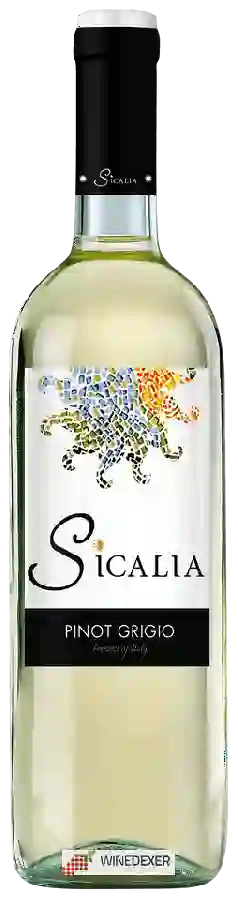
Winery SicaliaPinot Grigio
 White wine


This wine is composed of 100% of the grape variety Pinot Gris.
In the mouth this white wine is a powerful.
This wine generally goes well with vegetarian, appetizers and snacks or shellfish.

Taste structure of the Pinot Grigio from the Winery Sicalia
Light | Bold | |
Dry | Sweet | |
Soft | Acidic |
In the mouth the Pinot Grigio of Winery Sicalia in the region of Sicily is a powerful.
Food and wine pairings with Pinot Grigio
Pairings that work perfectly with Pinot Grigio



Original food and wine pairings with Pinot Grigio
The Pinot Grigio of Winery Sicalia matches generally quite well with dishes of shellfish, vegetarian or appetizers and snacks such as recipes of seafood pie, quiche without pastry, courgette and blue cheese or sunshine pie with tomato pesto and pine nuts.
Details and technical informations about Winery Sicalia's Pinot Grigio.
Discover the grape variety: Pinot gris
Rich, ample whites with a golden robe, showing aromas of pear, quince, honey, smoke, ginger and spice. Made as structured dry wines (Alsace AOC), off-dry and sumptuous late-harvest sweet (vendange tardive, sélection de grains nobles). Lighter and crisper in Italy as Pinot Grigio (Veneto, Friuli). Also in Germany (Grauburgunder), Hungary (Szürkebarát) and Oregon. A grey mutation of Pinot Noir.
Last vintages of this wine
The best vintages of Pinot Grigio from Winery Sicalia are 0, 2015
Informations about the Winery Sicalia
The Winery Sicalia is one of of the world's greatest estates. It offers 3 wines for sale in the of Sicily to come and discover on site or to buy online.

The wine region of Sicily
Major qualitative renewal. Sunny, expressive reds: fleshy, spicy Nero d'Avola (black cherry, blackberry, liquorice), fine, mineral Nerello Mascalese on Etna (recalls Pinot Noir), light, crisp Frappato in Cerasuolo di Vittoria DOCG. Lively, saline whites: Catarratto, fat, iodised Grillo, taut Carricante, floral Inzolia. Amber, walnutty fortified Marsala.
The word of the wine: Filling
Gentle transfer from one barrel to another to oxygenate the wine, eliminate some of the lees and reduce the carbon dioxide (fizz) that was released during the fermentations.