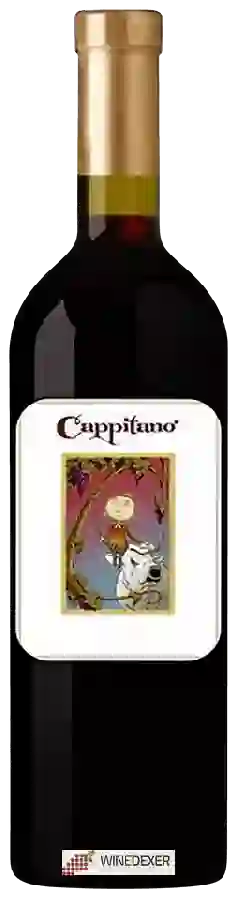
Winery SelvagrossaCappitano
 Red wine


In the mouth this red wine is a powerful with a nice freshness.
This wine generally goes well with poultry, beef or veal.

Taste structure of the Cappitano from the Winery Selvagrossa
Light | Bold | |
Smooth | Tannic | |
Dry | Sweet | |
Soft | Acidic |
In the mouth the Cappitano of Winery Selvagrossa in the region of Marche is a powerful with a nice freshness.
Food and wine pairings with Cappitano
Pairings that work perfectly with Cappitano



Original food and wine pairings with Cappitano

The Cappitano of Winery Selvagrossa matches generally quite well with dishes of beef, pasta or veal such as recipes of beef marengo "my mom" style, lasagne simplissimo or simple veal sauté.
Details and technical informations about Winery Selvagrossa's Cappitano.
Discover the grape variety: Merlot
Round and fleshy reds with a velvety texture, showing aromas of ripe plum, black cherry, cocoa and truffle notes with age. Supple tannins, generous alcohol, indulgent finish. Pillar of Libournais (Pomerol with Pétrus, Saint-Émilion with Cheval Blanc and Ausone) and signature of Super Tuscans, Italian Wales and Washington State. A cross of Cabernet Franc × Magdeleine Noire, France's most planted red variety.
Last vintages of this wine
The best vintages of Cappitano from Winery Selvagrossa are 2011, 0, 2016, 2009
Informations about the Winery Selvagrossa
The Winery Selvagrossa is one of of the world's greatest estates. It offers 9 wines for sale in the of Marche to come and discover on site or to buy online.

The wine region of Marche
Italian star of Verdicchio: exceptional age-worthy whites, straight and mineral with signature notes of green almond, lemon, green apple, dry herbs and a slightly bitter finish. Two DOCGs: Castelli di Jesi (coastal, airy) and Matelica (inland, more concentrated). Mediterranean reds: fleshy Montepulciano in Rosso Conero near Ancona, supple Sangiovese. Also fresh Pecorino and Passerina.
The word of the wine: Green harvest or green harvesting
The practice of removing excess bunches of grapes from certain vines, usually in July, but sometimes later. This is often necessary, but not always a good thing, as the remaining grapes tend to gain weight.