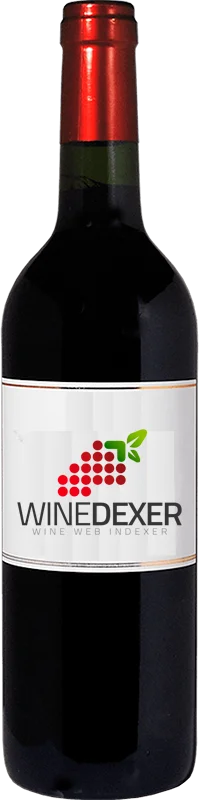
Winery SanzolesEl Cuco de Valdelaluna
 Red wine


In the mouth this red wine is a powerful.
This wine generally goes well with poultry, beef or veal.
Taste structure of the El Cuco de Valdelaluna from the Winery Sanzoles
Light | Bold | |
Smooth | Tannic | |
Dry | Sweet | |
Soft | Acidic |
In the mouth the El Cuco de Valdelaluna of Winery Sanzoles in the region of Castille-et-Léon is a powerful.
Food and wine pairings with El Cuco de Valdelaluna
Pairings that work perfectly with El Cuco de Valdelaluna



Original food and wine pairings with El Cuco de Valdelaluna

The El Cuco de Valdelaluna of Winery Sanzoles matches generally quite well with dishes of beef, pasta or veal such as recipes of beef stew express, seafood lasagna or vital tone / vitello tonnato (italy).
Details and technical informations about Winery Sanzoles's El Cuco de Valdelaluna.
Discover the grape variety: Marquette
Direct producer hybrid, interspecific cross between MN 1094 and Ravat noir obtained in 1989 by Peter Hemstad and James Luby at the University of Minnesota Research Center (United States). Note that it is the cousin of the black frontenac and the grandson of the pinot noir. It can be found in North America, Canada, ... in France it is almost unknown.
Last vintages of this wine
The best vintages of El Cuco de Valdelaluna from Winery Sanzoles are 0
Informations about the Winery Sanzoles
The Winery Sanzoles is one of of the world's greatest estates. It offers 2 wines for sale in the of Castille-et-Léon to come and discover on site or to buy online.

The wine region of Castille-et-Léon
Located in the northern half of the Central Iberian plateau, Castilla y León is the largest of Spain's 17 administrative regions, covering about one-fifth of the country's total area. It extends about 350 kilometres (220 miles) from central Spain to the northern coast. Just as wide, it connects the Rioja wine region to the Portuguese border. Red wines reign supreme in Castilla y León, and the Tempranillo grape is undoubtedly the king.
The word of the wine: Polyphenols
Substance contained essentially in the skin of the grape. The main ones are anthocyanins, which give red wines their colour and tannins.