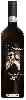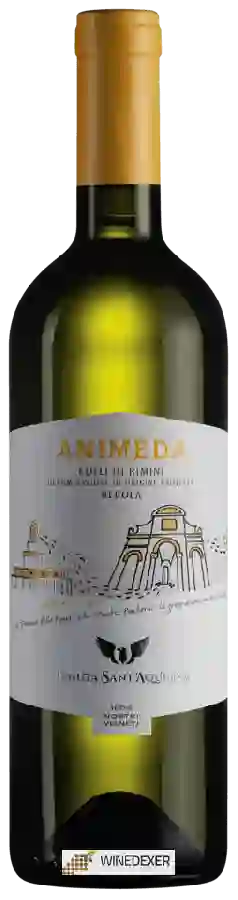
Winery Sant'AquilinaAniméda Rebola
 wine
wine
This wine generally goes well with
The Animéda Rebola of the Winery Sant'Aquilina is in the top 0 of wines of Colli di Rimini.

Details and technical informations about Winery Sant'Aquilina's Animéda Rebola.
Discover the grape variety: Doux d'Henry
Light, fruity reds with a clear ruby hue, soft tannins and an airy palate, featuring aromas of strawberry, raspberry, cherry and floral notes. Also vinified as a delicate off-dry. One of the last survivors of the historic Pinerolese DOC vineyard, west of Turin, yielding artisanal, character-driven cuvées. Native Piedmontese black variety, preserved for its heritage value.
Last vintages of this wine



The best vintages of Animéda Rebola from Winery Sant'Aquilina are 0, 2020
Informations about the Winery Sant'Aquilina
The Winery Sant'Aquilina is one of of the world's greatest estates. It offers 13 wines for sale in the of Colli di Rimini to come and discover on site or to buy online.

The wine region of Colli di Rimini
DOC of Emilia-Romagna on the hills of Rimini between the Adriatic and the Apennines, clay-limestone soils, temperate Mediterranean climate. Sangiovese is king in reds (60–75% in Rosso, ≥85% in varietal Superiore): fruity and structured with notes of red cherry, plum, violet, herbs and a spicy touch, firm tannins — Riserva for ageing. Cabernet Sauvignon, Ancellotta, Barbera and Ciliegiolo in blends. Floral Biancame and vibrant Rebola (Pignoletto) in whites, sometimes sweet passito.
The wine region of Emilia-Romagna
Kingdom of Lambrusco: fresh, fruity sparkling reds (blackberry, cherry, violet), from gourmet dry to convivial off-dry, perfect with local charcuterie. World's best-selling sparkling wine on the Emilia side (Sorbara, Grasparossa, Salamino). East, Romagna: supple fruity Sangiovese, Albana (Italy's 1st white DOCG, 1987) ample and almondy. Also red Gutturnio and white Pignoletto.
The word of the wine: Barrel
Bordeaux barrel of 225 litres, used to determine the tonneau (unit of measurement corresponding to four barrels, or 900 litres).