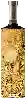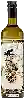
Winery SaltramShareholders' Reserve Riesling
 White wine
This wine generally goes well with pork, poultry or appetizers and snacks.
Food and wine pairings with Shareholders' Reserve Riesling
Pairings that work perfectly with Shareholders' Reserve Riesling



Original food and wine pairings with Shareholders' Reserve Riesling


The Shareholders' Reserve Riesling of Winery Saltram matches generally quite well with dishes of pork, shellfish or poultry such as recipes of roast pork with prunes, pasta with scampi or chinese fondue.
Details and technical informations about Winery Saltram's Shareholders' Reserve Riesling.
Discover the grape variety: Montepulciano
A very old grape variety, most likely originating in Italy, now cultivated mainly in the central and central-eastern parts of this country, registered in France in the Official Catalogue of wine grape varieties, list A1. Montepulciano has long been confused with sangiovese or nielluccio, an A.D.N. analysis has shown that it is different.
Informations about the Winery Saltram
The Winery Saltram is one of of the world's great estates. It offers 103 wines for sale in the of Barossa Valley to come and discover on site or to buy online.

The wine region of Barossa Valley
The wine region of Barossa Valley is located in the region of Barossa of Australie du Sud of Australia. We currently count 613 estates and châteaux in the of Barossa Valley, producing 2290 different wines in conventional, organic and biodynamic agriculture. The wines of Barossa Valley go well with generally quite well with dishes .
The wine region of Australie du Sud
SouthAustralia is one of Australia's six states, located (as the name suggests) in the south of the vast island continent. It's the engine room of the Australian wine industry, responsible for about half of the country's total production each year. But there's more to the region than quantity - countless high-quality wines are produced here, most from the region's signature Grape, Shiraz. These include such fine, collectible wines as Penfolds Grange, Henschke Hill of Grace, Torbreck The Laird and d'Arenberg The Dead Arm.
The word of the wine: Tasting
Sensory analysis of the wine according to a precise procedure and steps, using an appropriate vocabulary.