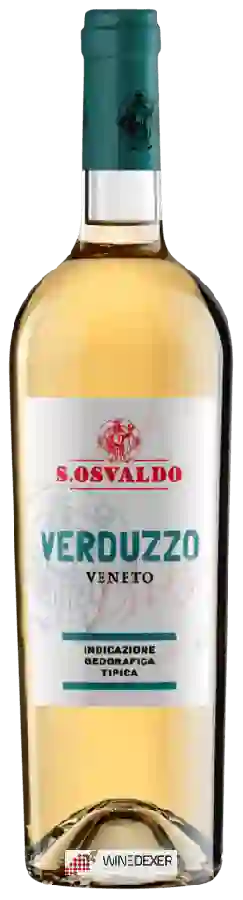
Winery S. OsvaldoVerduzzo
 White wine


In the mouth this white wine is a powerful.
This wine generally goes well with lean fish, shellfish or mature and hard cheese.

Taste structure of the Verduzzo from the Winery S. Osvaldo
Light | Bold | |
Dry | Sweet | |
Soft | Acidic |
In the mouth the Verduzzo of Winery S. Osvaldo in the region of Veneto is a powerful.
Food and wine pairings with Verduzzo
Pairings that work perfectly with Verduzzo



Original food and wine pairings with Verduzzo


The Verduzzo of Winery S. Osvaldo matches generally quite well with dishes of pasta, shellfish or mature and hard cheese such as recipes of spaghetti with summer vegetables, mussels with cream or breton cake with buckwheat flour.
Details and technical informations about Winery S. Osvaldo's Verduzzo.
Discover the grape variety: Fetească regală
Lively, aromatic whites to drink young, with a pale golden robe and an airy palate, with signature aromas of citrus (lemon, grapefruit), white flowers (acacia), green apple and fresh herbal notes. Also as sparkling and sweet wines. One of the most planted varieties in Romania, producing accessible dry and medium-dry wines across all regions. Romanian white variety obtained in 1920 at Daneș (fetească albă × grasă de Cotnari).
Last vintages of this wine

The best vintages of Verduzzo from Winery S. Osvaldo are 2015, 2018, 2016, 2017
Informations about the Winery S. Osvaldo
The Winery S. Osvaldo is one of of the world's greatest estates. It offers 40 wines for sale in the of Veneto to come and discover on site or to buy online.

The wine region of Veneto
World star of Prosecco: fresh, light Glera sparklers with notes of pear, green apple and white flowers, fruity, convivial bubbles. Veronese reds from Corvina and Rondinella: light, crisp Bardolino, fruity Valpolicella, opulent, concentrated Amarone DOCG (black cherry, chocolate, raisin) from dried grapes. Mineral, almondy Soave (Garganega) whites, fresh Pinot Grigio. 97,500 ha, Italy's largest production.
The word of the wine: Aging
Period during which a wine is kept in a cellar where it goes through different phases of evolution of its aromatic range and a maturation of its constituents (evolution of the colour, refining of the tannins, harmonization of the different flavours, etc.). The wine evolves better and less quickly in large containers, whereas it deteriorates prematurely in half-bottles.