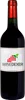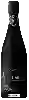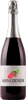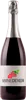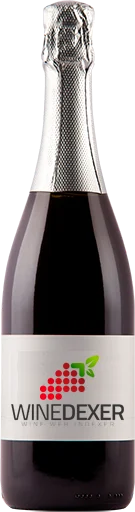
Winery S. CroceLambrusco Salamino di Santa Croce Secco
 Sparkling wine


This wine generally goes well with pork, poultry or rich fish (salmon, tuna etc).
Food and wine pairings with Lambrusco Salamino di Santa Croce Secco
Pairings that work perfectly with Lambrusco Salamino di Santa Croce Secco



Original food and wine pairings with Lambrusco Salamino di Santa Croce Secco


The Lambrusco Salamino di Santa Croce Secco of Winery S. Croce matches generally quite well with dishes of pork, rich fish (salmon, tuna etc) or mature and hard cheese such as recipes of pork gyros, grilled sardine fillets or shepherd's pie and leek fondue.
Details and technical informations about Winery S. Croce's Lambrusco Salamino di Santa Croce Secco.
Discover the grape variety: Velteliner vert
- Origin: This variety is widely cultivated in Austria. It is believed to be the result of a natural intraspecific cross between Savagnin and another ancient Austrian variety called Saint Georgen. It can also be found in the northeastern part of Italy, in Germany, Hungary, Romania, Russia, the Czech Republic, Slovakia, Moravia, Croatia, the United States (Oregon, Maryland, etc.), Australia, New Zealand and Canada.
Last vintages of this wine
The best vintages of Lambrusco Salamino di Santa Croce Secco from Winery S. Croce are 2014, 2017, 2016, 2008 and 0.
Informations about the Winery S. Croce
The Winery S. Croce is one of of the world's greatest estates. It offers 24 wines for sale in the of Lambrusco Salamino di Santa Croce to come and discover on site or to buy online.

The wine region of Lambrusco Salamino di Santa Croce
The wine region of Lambrusco Salamino di Santa Croce is located in the region of Émilie-Romagne of Italy. Wineries and vineyards like the Domaine Vigneto Saetti or the Domaine Torre Colle produce mainly wines sparkling, red and pink. On the nose of Lambrusco Salamino di Santa Croce often reveals types of flavors of cherry, blueberry or raspberry and sometimes also flavors of red fruit, black fruit or non oak. In the mouth of Lambrusco Salamino di Santa Croce is a with a nice balance between acidity and tannins.
The wine region of Emilia-Romagna
Romagna/emilia">Emilia-Romagna is a Rich and fertile region in Northern Italy, and one of the country's most prolific wine-producing regions, with over 58,000 hectares (143,320 acres) of vines in 2010. It is 240 kilometers (150 miles) wide and stretches across almost the entire northern Italian peninsula, sandwiched between Tuscany to the South, Lombardy and Veneto to the north and the Adriatic Sea to the east. Nine miles of Liguria is all that separates Emilia-Romagna from the Ligurian Sea, and its uniqueness as the only Italian region with both an east and west coast. Emilia-Romagna's wine-growing heritage dates back to the seventh century BC, making it one of the oldest wine-growing regions in Italy.
The word of the wine: Bold
A wine with a smooth texture reminiscent of fats.