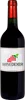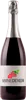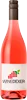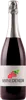
Winery S. Croce100 Vendemmie Brut Rosso
 wine
wine
This wine generally goes well with
The 100 Vendemmie Brut Rosso of the Winery S. Croce is in the top 0 of wines of Emilia.
Details and technical informations about Winery S. Croce's 100 Vendemmie Brut Rosso.
Discover the grape variety: Salagnin
Discovered in the 1870s by Mr. Robin, who lived in the Drôme at the time in Lapeyrouse-Mornay, this ancient grape variety is believed to have originated in the north of Isère. It can also be found in Switzerland. According to Thierry Lacombe (I.N.R.A./Montpellier), it is the result of a natural intraspecific crossing between Tressot Noir and Mondeuse Blanche. It should be noted in passing that, on the one hand, it has exactly the same parents as the mondeuse noire, that on the other hand, it is the mother of the diolinoir and, finally, is related to the servanin. Robin noir is not widely propagated today because it is not well known, although it is listed in the Official Catalogue of Wine Grape Varieties, list A1.
Informations about the Winery S. Croce
The Winery S. Croce is one of of the world's great estates. It offers 24 wines for sale in the of Emilia to come and discover on site or to buy online.

The wine region of Emilia
The wine region of Emilia is located in the region of Émilie-Romagne of Italy. We currently count 397 estates and châteaux in the of Emilia, producing 1004 different wines in conventional, organic and biodynamic agriculture. The wines of Emilia go well with generally quite well with dishes .
The wine region of Emilia-Romagna
Romagna/emilia">Emilia-Romagna is a Rich and fertile region in Northern Italy, and one of the country's most prolific wine-producing regions, with over 58,000 hectares (143,320 acres) of vines in 2010. It is 240 kilometers (150 miles) wide and stretches across almost the entire northern Italian peninsula, sandwiched between Tuscany to the South, Lombardy and Veneto to the north and the Adriatic Sea to the east. Nine miles of Liguria is all that separates Emilia-Romagna from the Ligurian Sea, and its uniqueness as the only Italian region with both an east and west coast. Emilia-Romagna's wine-growing heritage dates back to the seventh century BC, making it one of the oldest wine-growing regions in Italy.
The word of the wine: Game
A family of animal aromas reminiscent of venison and present in certain old red wines. See venison.