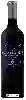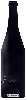
Domaine RousselinRendez-Vous Grenache Noir
 Red wine
In the mouth this red wine is a powerful.
This wine generally goes well with poultry, beef or lamb.
Taste structure of the Rendez-Vous Grenache Noir from the Domaine Rousselin
Light | Bold | |
Smooth | Tannic | |
Dry | Sweet | |
Soft | Acidic |
In the mouth the Rendez-Vous Grenache Noir of Domaine Rousselin in the region of Languedoc-Roussillon is a powerful.
Food and wine pairings with Rendez-Vous Grenache Noir
Pairings that work perfectly with Rendez-Vous Grenache Noir



Original food and wine pairings with Rendez-Vous Grenache Noir

The Rendez-Vous Grenache Noir of Domaine Rousselin matches generally quite well with dishes of beef, pasta or lamb such as recipes of caramelized beef with onions, lasagne with salmon, goat cheese and spinach or mansaf, or jordanian lamb (jordan).
Details and technical informations about Domaine Rousselin's Rendez-Vous Grenache Noir.
Discover the grape variety: Bronner
An interspecific cross between merzling and rondo obtained in 1975 by Norbert Becker of the Freiburg Research Institute in Germany. It has the particularity of having only one gene for resistance to mildew and powdery mildew. However, the I.N.R.A. Bordeaux Sciences Agro has since noted a loss of efficiency on mildew due to a bypass. It can be found in Denmark, the Netherlands, Germany, Belgium, Italy, England, etc. It is not very widespread today and is almost unknown in France. It should not be confused with another variety of the same name, which comes from a Pinot Blanc seedling, also obtained in Germany by Johann Philipp Bronner.
Informations about the Domaine Rousselin
The Domaine Rousselin is one of of the world's greatest estates. It offers 10 wines for sale in the of Languedoc-Roussillon to come and discover on site or to buy online.

The wine region of Languedoc-Roussillon
Languedoc (formerly Coteaux du Languedoc) is a key appellation used in the Languedoc-Roussillon wine region of southern France. It covers Dry table wines of all three colors (red, white and rosé) from the entire region, but leaves Sweet and Sparkling wines to other more specialized appellations. About 75% of all Languedoc wines are red, with the remaining 25% split roughly down the middle between whites and rosés. The appellation covers most of the Languedoc region and almost a third of all the vineyards in France.
The word of the wine: Friand
A light, easy-drinking wine with an immediate and fresh fruitiness.