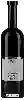
Weingut Rolf Heinrich HeilbronnGrauburgunder Kabinett Trocken
 White wine
In the mouth this white wine is a .
This wine generally goes well with pork, cured meat or mushrooms.
Taste structure of the Grauburgunder Kabinett Trocken from the Weingut Rolf Heinrich Heilbronn
Light | Bold | |
Dry | Sweet | |
Soft | Acidic |
In the mouth the Grauburgunder Kabinett Trocken of Weingut Rolf Heinrich Heilbronn in the region of Württemberg is a .
Food and wine pairings with Grauburgunder Kabinett Trocken
Pairings that work perfectly with Grauburgunder Kabinett Trocken


Original food and wine pairings with Grauburgunder Kabinett Trocken

The Grauburgunder Kabinett Trocken of Weingut Rolf Heinrich Heilbronn matches generally quite well with dishes of pork, spicy food or mushrooms such as recipes of simple pork roast, chicken tagine with apricots or quiche with mixed vegetables.
Details and technical informations about Weingut Rolf Heinrich Heilbronn's Grauburgunder Kabinett Trocken.
Discover the grape variety: Molette
Molette blanc is a grape variety that originated in France (Savoie). It produces a variety of grape specially used for wine making. It is rare to find this grape to eat on our tables. This variety of grape is characterized by medium-sized bunches and small grapes. The Molette blanc can be found cultivated in these vineyards: South-West, Cognac, Bordeaux, Savoie & Bugey, Provence & Corsica, Rhone Valley.
Informations about the Weingut Rolf Heinrich Heilbronn
The Weingut Rolf Heinrich Heilbronn is one of of the world's greatest estates. It offers 30 wines for sale in the of Württemberg to come and discover on site or to buy online.

The wine region of Württemberg
Württemberg is known as Germany's premier red wine region. With almost 11,500 hectares (28,500 acres) of vineyards, it is the fourth-largest wine region in the country. Found adjacent to Baden and South of Franken, Wüttemberg is a particularly hilly and rural wine-region. Almost 70-percent of Württemberg wines are red, predominantly made from Trollinger, SchwarzRiesling and Lemberger.
The word of the wine: Density per hectare
Number of vines per hectare. For the same yield, a vine planted with 3,000 vines per hectare bears many more bunches (per vine) than a vine planted with 10,000. The grapes will therefore be less rich in sugar and polyphenols (tannins, aromas...).