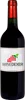
Winery Reis & LuffBlauer Spätburgunder Trocken
 Red wine



In the mouth this red wine is a with a nice freshness.
This wine generally goes well with poultry, beef or veal.
Taste structure of the Blauer Spätburgunder Trocken from the Winery Reis & Luff
Light | Bold | |
Smooth | Tannic | |
Dry | Sweet | |
Soft | Acidic |
In the mouth the Blauer Spätburgunder Trocken of Winery Reis & Luff in the region of Rheinhessen is a with a nice freshness.
Food and wine pairings with Blauer Spätburgunder Trocken
Pairings that work perfectly with Blauer Spätburgunder Trocken



Original food and wine pairings with Blauer Spätburgunder Trocken

The Blauer Spätburgunder Trocken of Winery Reis & Luff matches generally quite well with dishes of beef, veal or game (deer, venison) such as recipes of cornish pasties, piccata with cheese or obelix's boar leg in the oven.
Details and technical informations about Winery Reis & Luff's Blauer Spätburgunder Trocken.
Discover the grape variety: Alicante Bouschet
It is a crossbreed made in 1855 by Louis and Henri Bouschet from an intraspecific crossing between Grenache noir and Petit Bouschet. The Alicante Henri Bouschet is less and less multiplied, registered however in the Official Catalogue of the varieties of vine of wine grapes list A.
Last vintages of this wine
The best vintages of Blauer Spätburgunder Trocken from Winery Reis & Luff are 0
Informations about the Winery Reis & Luff
The Winery Reis & Luff is one of of the world's greatest estates. It offers 12 wines for sale in the of Rheinhessen to come and discover on site or to buy online.

The wine region of Rheinhessen
Rheinhessen is Germany's largest region for producing the quality wines of the Qualitätswein bestimmter Anbaugebiete (QbA) and Prädikatswein designations, with roughly 26,500 hectares (65,000 acres) of Vineyard">Vineyards as of 2014. Many of its most significant viticultural areas are favorably influenced by the Rhine river, which runs aLong its North and eastern borders. The Rhine, along with the Nahe river to the west and the Haardt mountains to its South, form a natural border. Rheinhessen covers an area south of Rheingau, north of Pfalz and east of Nahe, and is located within the Rhineland-Palatinate federal state.
The word of the wine: Pinot meunier
Cultivated in the 19th century in all the northern vineyards, this black grape variety has largely regressed since. Very present in the Marne valley, it constitutes a third of the vineyards in Champagne, alongside pinot noir and chardonnay with which it is often blended. It brings roundness and red and yellow fruit aromas to champagnes. Pinot meunier is also the dominant grape variety in red and rosé wines in the Orleans AOC and the rare Touraine-Noble-Joué, a grey wine. Syn.: meunier.