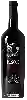
Winery PusoleCasesparse
 Red wine


In the mouth this red wine is a powerful with a lot of tannins present in the mouth.
This wine generally goes well with beef, lamb or pasta.
Taste structure of the Casesparse from the Winery Pusole
Light | Bold | |
Smooth | Tannic | |
Dry | Sweet | |
Soft | Acidic |
In the mouth the Casesparse of Winery Pusole in the region of Sardinia is a powerful with a lot of tannins present in the mouth.
Food and wine pairings with Casesparse
Pairings that work perfectly with Casesparse



Original food and wine pairings with Casesparse
The Casesparse of Winery Pusole matches generally quite well with dishes of beef, pasta or lamb such as recipes of beef fashion, pasta with avocado or lamb tagine with onions, purple olives and lemons....
Details and technical informations about Winery Pusole's Casesparse.
Discover the grape variety: Feteasca neagra
A very old variety native to Romania, found much more in Romanian Moldavia and Wallachia, almost unknown in France, but registered in the Official Catalogue of Wine Grape Varieties, list A2. According to Viala and Vermorel, it is the black form of feteasca alba. It should not be confused with feteasca regala.
Last vintages of this wine
The best vintages of Casesparse from Winery Pusole are 2016
Informations about the Winery Pusole
The Winery Pusole is one of of the world's greatest estates. It offers 8 wines for sale in the of Sardinia to come and discover on site or to buy online.

The wine region of Sardinia
Sardinia, located 240 km off the west coast of mainland Italy, is the second largest island in the Mediterranean. With an area of about 9,300 square miles, it is almost three times the Size of Corsica, its immediate neighbor to the North, and only slightly smaller than the other major Italian island, Sicily. The island, called Sardegna by its Italian-speaking inhabitants, has belonged to various empires and kingdoms over the centuries. This is reflected in its place names, architecture, languages and dialects, and its unique portfolio of wine grapes.
The word of the wine: Closed
A flat wine that does not express its aromas.