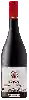
Georges Puig - Domaine Puig ParahyGrenat Rivesaltes
 Red wine
This wine generally goes well with beef, veal or pasta.
Food and wine pairings with Grenat Rivesaltes
Pairings that work perfectly with Grenat Rivesaltes



Original food and wine pairings with Grenat Rivesaltes
The Grenat Rivesaltes of Georges Puig - Domaine Puig Parahy matches generally quite well with dishes of beef, pasta or veal such as recipes of sloth pork loin, goat cheese and spinach lasagne or sauté of veal with chorizo.
Details and technical informations about Georges Puig - Domaine Puig Parahy's Grenat Rivesaltes.
Discover the grape variety: Pinella blanca
A very old grape variety that has been cultivated for a very long time in Italy - where it originated - and that can still be found today in the Veneto region. It is also known in Slovenia and Bulgaria, but is virtually unknown in France. According to genetic analysis, it is related to the white gouais, which it resembles somewhat. There is a Pinella nera, but it is not clear whether it is the black form.
Informations about the Georges Puig - Domaine Puig Parahy
The Georges Puig - Domaine Puig Parahy is one of of the world's greatest estates. It offers 20 wines for sale in the of Rivesaltes to come and discover on site or to buy online.

The wine region of Rivesaltes
Rivesaltes is an appellation for the historic Sweet wines of eastern Roussillon, in the DeepSouth of France. The natural sweet wines produced in this region have been revered since at least the 14th century. The technique used to make them is one of many techniques used for sweet wines. Unlike botrytized wines or ice wines, natural sweet wines are made by Mutage, a process that involves stopping the Fermentation of the must while a high level of natural sweetness remains.
The wine region of Languedoc-Roussillon
Languedoc (formerly Coteaux du Languedoc) is a key appellation used in the Languedoc-Roussillon wine region of southern France. It covers Dry table wines of all three colors (red, white and rosé) from the entire region, but leaves Sweet and Sparkling wines to other more specialized appellations. About 75% of all Languedoc wines are red, with the remaining 25% split roughly down the middle between whites and rosés. The appellation covers most of the Languedoc region and almost a third of all the vineyards in France.
The word of the wine: Flavor
Sensation (sweet, salty, sour or bitter) produced on the tongue by a food.