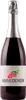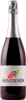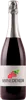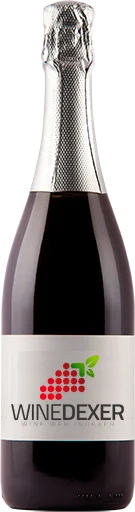
Winery Podere GaiaschiRico Brut Millesimato
 Sparkling wine



This wine generally goes well with vegetarian, appetizers and snacks or lean fish.
Food and wine pairings with Rico Brut Millesimato
Pairings that work perfectly with Rico Brut Millesimato



Original food and wine pairings with Rico Brut Millesimato


The Rico Brut Millesimato of Winery Podere Gaiaschi matches generally quite well with dishes of pasta, vegetarian or appetizers and snacks such as recipes of chinese soy and chicken noodles (wok style), ham and comté quiche or verrine of beetroot and lump roe.
Details and technical informations about Winery Podere Gaiaschi's Rico Brut Millesimato.
Discover the grape variety: Gros Colman
From the South Caucasus, perhaps in Georgia, some writings give it as coming from Russia, a country close to the previous one. For a long time, it was grown in greenhouses, particularly in Belgium, but also in England, France, Holland and Japan. It was rarely cultivated in the field, but a few attempts were made without much success on the banks of the Rhine, in the Tarn et Garonne region and in Thomery in the Seine et Marne region. Today, it is no longer multiplied in nurseries and is therefore in danger of extinction. It is thought to be the result of a natural intraspecific cross between white tigvoasa or furjmony feher - a Romanian variety with female flowers - and black kadarka. There is a clone that takes on a very characteristic purple color in the fall, with larger berries, larger bunches and later ripening.
Last vintages of this wine
The best vintages of Rico Brut Millesimato from Winery Podere Gaiaschi are 0
Informations about the Winery Podere Gaiaschi
The Winery Podere Gaiaschi is one of of the world's greatest estates. It offers 22 wines for sale in the of Emilia-Romagna to come and discover on site or to buy online.

The wine region of Emilia-Romagna
Romagna/emilia">Emilia-Romagna is a Rich and fertile region in Northern Italy, and one of the country's most prolific wine-producing regions, with over 58,000 hectares (143,320 acres) of vines in 2010. It is 240 kilometers (150 miles) wide and stretches across almost the entire northern Italian peninsula, sandwiched between Tuscany to the South, Lombardy and Veneto to the north and the Adriatic Sea to the east. Nine miles of Liguria is all that separates Emilia-Romagna from the Ligurian Sea, and its uniqueness as the only Italian region with both an east and west coast. Emilia-Romagna's wine-growing heritage dates back to the seventh century BC, making it one of the oldest wine-growing regions in Italy.
The word of the wine: Pineau de la Loire
See chenin blanc.