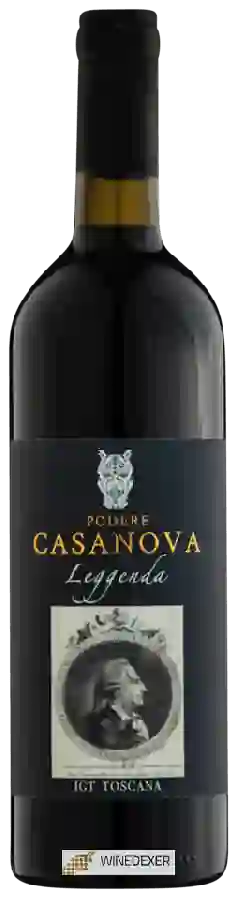
Winery Podere CasanovaLeggenda
 Red wine


In the mouth this red wine is a powerful with a nice balance between acidity and tannins.
This wine generally goes well with poultry, beef or veal.
Taste structure of the Leggenda from the Winery Podere Casanova
Light | Bold | |
Smooth | Tannic | |
Dry | Sweet | |
Soft | Acidic |
In the mouth the Leggenda of Winery Podere Casanova in the region of Tuscany is a powerful with a nice balance between acidity and tannins.
Wine flavors and olphactive analysis

Food and wine pairings with Leggenda
Pairings that work perfectly with Leggenda



Original food and wine pairings with Leggenda


The Leggenda of Winery Podere Casanova matches generally quite well with dishes of beef, lamb or veal such as recipes of lomo saltado, rack of lamb with antiboise sauce or caramelized lamb mice.
Details and technical informations about Winery Podere Casanova's Leggenda.
Discover the grape variety: Gascon
Gascon noir is a grape variety that originated in France. It produces a variety of grape specially used for wine making. It is rare to find this grape to eat on our tables. The Gascon noir can be found cultivated in these vineyards: South-West, Cognac, Bordeaux, Provence & Corsica, Rhone Valley.
Last vintages of this wine
The best vintages of Leggenda from Winery Podere Casanova are 0, 2016
Informations about the Winery Podere Casanova
The Winery Podere Casanova is one of of the world's greatest estates. It offers 8 wines for sale in the of Tuscany to come and discover on site or to buy online.

The wine region of Tuscany
Tuscany is one of the most famous and prolific wine regions in Europe. It is best known for its Dry red wines made from Sangiovese grapes, which dominate production. These include Chianti, Brunello di Montalcino and Vino Nobile di Montepulciano. The region's Vin Santo is also highly prized, as are its passito dessert wines, though these are produced in comparatively tiny quantities.
The word of the wine: Aging on lees
Maturing on the lees enhances the stability, aromatic complexity and texture of white wines, which gain in body and volume. This phenomenon is induced by autolysis, the process of self-degradation of the lees.