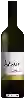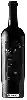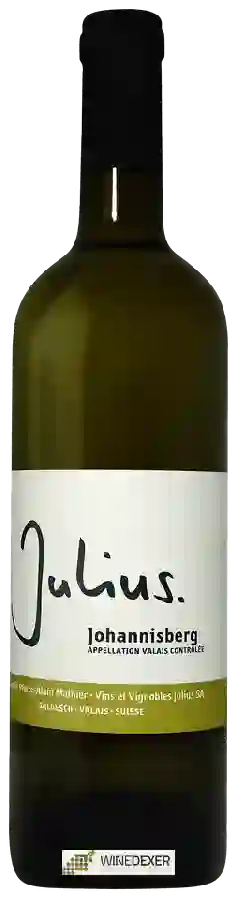
Winery JuliusJohannisberg
 White wine



This wine generally goes well with beef, lamb or mature and hard cheese.

Wine flavors and olphactive analysis

On the nose the Johannisberg of Winery Julius in the region of Valais often reveals types of flavors of non oak, tree fruit or tropical fruit.
Food and wine pairings with Johannisberg
Pairings that work perfectly with Johannisberg



Original food and wine pairings with Johannisberg

The Johannisberg of Winery Julius matches generally quite well with dishes of beef, lamb or spicy food such as recipes of stewed beef heart, mamyjaja lamb mouse tagine or traditional hungarian goulash.
Details and technical informations about Winery Julius's Johannisberg.
Discover the grape variety: Maturana blanca
Crisp, aromatic dry whites with a pale golden robe, a slender palate and preserved acidity of signature citrus (lemon, grapefruit), green apple, exotic fruits (pineapple, passion fruit), white flowers and mineral notes. A modern, expressive profile. An almost extinct grape, officially reintroduced to Rioja DOCa in 2007. Grown to diversify the quality range of Riojan whites. Native Spanish grape of Rioja, in full revival.
Last vintages of this wine
The best vintages of Johannisberg from Winery Julius are 2018, 2016, 2014, 2013 and 2012.
Informations about the Winery Julius
The Winery Julius is one of of the world's greatest estates. It offers 26 wines for sale in the of Valais to come and discover on site or to buy online.

The wine region of Valais
Switzerland's largest vineyard, capital of native grapes. Straight, precise alpine whites: light, floral Chasselas (Fendant), signature Petite Arvine with saline, grapefruit and rhubarb notes, rich, apricoty Amigne, mineral Humagne Blanche. Altitude reds: fine Pinot Noir, crisp Gamay, native Cornalin and Humagne Rouge, spicy and deep. Highly precise alpine age-worthy wines.
The word of the wine: Viscosity
Consistency of wine reminiscent of the tactile sensation of sugar syrup with varying degrees of fluidity, due to the alcohol and natural sugar in the grapes present in sweet wines. In excess, this sensation can make the wine pasty and heavy. To the eye, viscosity is referred to as tears.