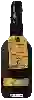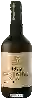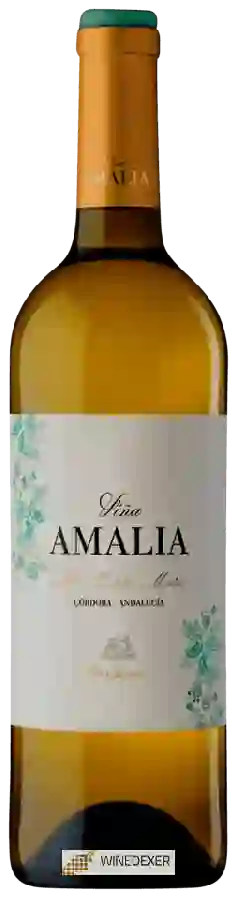
Winery Perez BarqueroViña Amalia
 White wine



This wine generally goes well with
The Viña Amalia of the Winery Perez Barquero is in the top 50 of wines of Andalousie.
Wine flavors and olphactive analysis

On the nose the Viña Amalia of Winery Perez Barquero in the region of Andalousie often reveals types of flavors of earth, citrus fruit.
Details and technical informations about Winery Perez Barquero's Viña Amalia.
Discover the grape variety: Torrontés riojano
Most certainly of Argentine origin, very well known in this country, particularly in the Rioja and Salta regions. It is said to be the result of a cross between the Muscat d'Alexandrie and the Listan Prieto Noir, also known as Criolla Chica. We can note its resemblance with the torrontés sanjuanino, most certainly by the fact that it is also resulting from the same crossing. In Spain (Galicia), a grape variety bears the name of torrontés, it is most certainly the fernao Pires. Torrontés riojano is also present in Chile, but in France it is practically unknown.
Last vintages of this wine
The best vintages of Viña Amalia from Winery Perez Barquero are 2018, 0
Informations about the Winery Perez Barquero
The Winery Perez Barquero is one of of the world's great estates. It offers 30 wines for sale in the of Andalousie to come and discover on site or to buy online.

The wine region of Andalousie
Andalusia, located in the southwest of Spain, is the southernmost administrative region of the Spanish mainland. It is home to the world-famous fortified wine, sherry. This dynamic region is the most populous in Spain and has a colourful history. Its strategic position at the gateway to the Mediterranean and its proximity to Africa have made it the target of many settlements and invasions throughout history.
The word of the wine: Tanin
A natural compound contained in the skin of the grape, the seed or the woody part of the bunch, the stalk. The maceration of red wines allows the extraction of tannins, which give the texture, the solidity and also the mellowness when the tannins are "ripe". The winemaker seeks above all to extract the tannins from the skin, the ripest and most noble. The tannins of the seed or stalk, which are "greener", especially in average years, give the wine hardness and astringency. The wines of Bordeaux (based on Cabernet and Merlot) are full of tannins, those of Burgundy much less so, with Pinot Noir containing little.