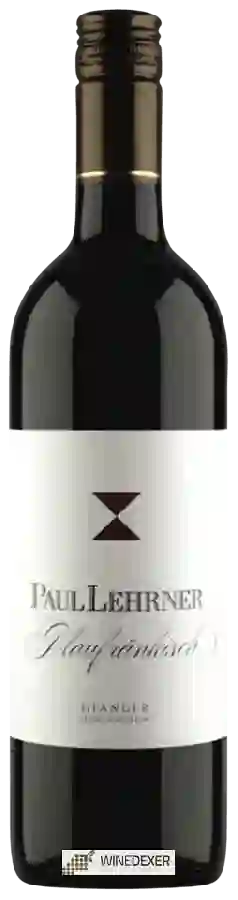
Winery Paul LehrnerGfanger Blaufränkisch
 Red wine


In the mouth this red wine is a powerful with a nice balance between acidity and tannins.
This wine generally goes well with poultry, beef or pasta.

Taste structure of the Gfanger Blaufränkisch from the Winery Paul Lehrner
Light | Bold | |
Smooth | Tannic | |
Dry | Sweet | |
Soft | Acidic |
In the mouth the Gfanger Blaufränkisch of Winery Paul Lehrner in the region of Weinland is a powerful with a nice balance between acidity and tannins.
Wine flavors and olphactive analysis




On the nose the Gfanger Blaufränkisch of Winery Paul Lehrner in the region of Weinland often reveals types of flavors of non oak, microbio or oak and sometimes also flavors of spices, red fruit or black fruit.
Food and wine pairings with Gfanger Blaufränkisch
Pairings that work perfectly with Gfanger Blaufränkisch



Original food and wine pairings with Gfanger Blaufränkisch
The Gfanger Blaufränkisch of Winery Paul Lehrner matches generally quite well with dishes of beef, pasta or poultry such as recipes of cabri en colombo with creole sauce, pasta gratin or special' tagliatelle carbonara.
Details and technical informations about Winery Paul Lehrner's Gfanger Blaufränkisch.
Discover the grape variety: Servant
Table grape with elongated golden berries, thick skin and crunchy flesh; neutral and fresh taste with understated notes of white-fleshed fruits and fresh grape. Late-ripening with excellent winter storage. Grown for fresh consumption in the Mediterranean (Vaucluse, Var), prized for its excellent post-harvest keeping quality and historically served at year-end tables. Native French white table grape from the South-East.
Last vintages of this wine

The best vintages of Gfanger Blaufränkisch from Winery Paul Lehrner are 2016, 2012, 2014, 2013 and 2011.
Informations about the Winery Paul Lehrner
The Winery Paul Lehrner is one of of the world's greatest estates. It offers 11 wines for sale in the of Burgenland to come and discover on site or to buy online.

The wine region of Burgenland
Cradle of great Austrian reds. Signature Blaufränkisch: structured, spicy reds with black fruits (blackberry, black cherry), firm tannins and lively acidity, mineral profile. More supple Zweigelt on red fruit. Lively Welschriesling, peppery Grüner Veltliner, round Chardonnay whites.
The wine region of Weinland
Vast German-speaking region in north-eastern Switzerland, the country's largest production area. Signature Pinot Noir (Blauburgunder): fine, fresh reds with notes of cherry, raspberry, undergrowth and sweet spices, silky tannins. Elegant, delicate style, often barrel-aged. Also light, floral Müller-Thurgau (Riesling-Sylvaner), lively, lemony native Räuschling, ample Pinot Gris.
The word of the wine: Tired
Wine that is too old, faded or has suffered from handling such as racking or bottling. In the first case it is too late, in the second case the wine must be put to rest for a few weeks in the cellar.


