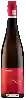
Winery Ortenauer WeinkellerEcht Süss Spätburgunder
 Red wine
In the mouth this red wine is a with a nice freshness.
This wine generally goes well with poultry, beef or veal.

Taste structure of the Echt Süss Spätburgunder from the Winery Ortenauer Weinkeller
Light | Bold | |
Smooth | Tannic | |
Dry | Sweet | |
Soft | Acidic |
In the mouth the Echt Süss Spätburgunder of Winery Ortenauer Weinkeller in the region of Baden is a with a nice freshness.
Food and wine pairings with Echt Süss Spätburgunder
Pairings that work perfectly with Echt Süss Spätburgunder



Original food and wine pairings with Echt Süss Spätburgunder

The Echt Süss Spätburgunder of Winery Ortenauer Weinkeller matches generally quite well with dishes of beef, veal or game (deer, venison) such as recipes of tournedos with foie gras, shoulder of lamb stuffed with cognac or rabbit socks in gibelotte.
Details and technical informations about Winery Ortenauer Weinkeller's Echt Süss Spätburgunder.
Discover the grape variety: Seyval blanc
Lively, taut whites with a slender palate and fresh acidity, with aromas of citrus (lemon, grapefruit), green apple, white flowers, pear and discreet herbal notes. Refreshing finish; best drunk young. A cold- and disease-resistant interspecific variety, it produces whites and sparkling wines in the UK (Kent, Sussex), Canada (Quebec, Ontario) and the northeastern US. French hybrid created by Bertille Seyve (Seyve-Villard 5-276).
Informations about the Winery Ortenauer Weinkeller
The Winery Ortenauer Weinkeller is one of of the world's great estates. It offers 79 wines for sale in the of Baden to come and discover on site or to buy online.

The wine region of Baden
German capital of Pinot Noir (Spätburgunder): silky, fine reds with notes of red fruits, cherry, undergrowth and sweet spices, melted tannins. Round Grauburgunder (Pinot Gris), lively Weissburgunder, supple Müller-Thurgau, mineral Riesling. Germany's 3rd region (15,000 ha) in Baden-Württemberg facing Alsace, one of the country's warmest climates, volcanic soils at the Kaiserstuhl. Cradle of modern great German reds, elegant and fine.
The word of the wine: Aranean
The underside of a grape leaf blade covered with tiny hairs distributed in a web-like pattern.