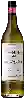
Winery ObristAigle
 White wine



In the mouth this white wine is a with a nice freshness.
This wine generally goes well with poultry, lean fish or mild and soft cheese.

Taste structure of the Aigle from the Winery Obrist
Light | Bold | |
Dry | Sweet | |
Soft | Acidic |
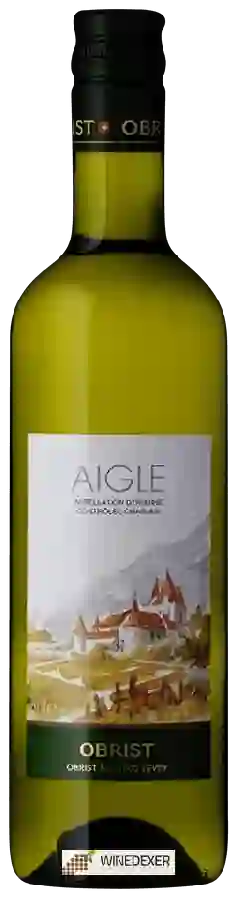
In the mouth the Aigle of Winery Obrist in the region of Vaud is a with a nice freshness.
Food and wine pairings with Aigle
Pairings that work perfectly with Aigle



Original food and wine pairings with Aigle

The Aigle of Winery Obrist matches generally quite well with dishes of poultry, lean fish or mild and soft cheese such as recipes of savoury cake base and various fillings, sole fillets with butter or my lasagna bolognese (without béchamel sauce).
Details and technical informations about Winery Obrist's Aigle.
Discover the grape variety: Chasselas
Light, lively whites with a tender palate and low acidity, with discreet aromas of fresh hazelnut, white flowers, light honey, apple and strongly terroir-driven mineral notes ("chameleon wine" of Swiss soils). Made as dry, often slightly sparkling whites. Absolute star of Vaud (Dézaley, Calamin, Lavaux Grand Cru) and Valais (Fendant) in Switzerland. Also in Pouilly-sur-Loire AOC and the German Jura. Excellent table grape.
Last vintages of this wine
The best vintages of Aigle from Winery Obrist are 0
Informations about the Winery Obrist
The Winery Obrist is one of of the world's great estates. It offers 140 wines for sale in the of Aigle to come and discover on site or to buy online.

The wine region of Aigle
AOC Chablais vaudois (135 ha, Chasselas capital): Chasselas reigns exclusively in white — aromatic, elegant and powerful, aromas of white fruits, citrus, flowers and mineral touch, freshness and tension preserved. Steep south-facing slopes supported by dry stone walls, gravelly-schistous well-drained soils, generous sunshine, warm dry foehn influence, centuries-old terraces — among the finest Swiss Chasselas.
The wine region of Vaud
World reference for Chasselas (~60% of the vineyard). Mineral, delicate whites with signature notes of green apple, citrus, white flowers, fresh almond and a saline touch, low acidity and a silky palate. Maximum expression in Lavaux (UNESCO 2007) on Lake Geneva terraces. Also La Côte, Chablais and the iconic Dézaley.
The word of the wine: Tanin
A natural compound contained in the skin of the grape, the seed or the woody part of the bunch, the stalk. The maceration of red wines allows the extraction of tannins, which give the texture, the solidity and also the mellowness when the tannins are "ripe". The winemaker seeks above all to extract the tannins from the skin, the ripest and most noble. The tannins of the seed or stalk, which are "greener", especially in average years, give the wine hardness and astringency. The wines of Bordeaux (based on Cabernet and Merlot) are full of tannins, those of Burgundy much less so, with Pinot Noir containing little.