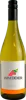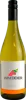
Winery MuròlaVitige
 White wine



In the mouth this white wine is a with a nice freshness.
This wine generally goes well with vegetarian, appetizers and snacks or lean fish.
Taste structure of the Vitige from the Winery Muròla
Light | Bold | |
Dry | Sweet | |
Soft | Acidic |
In the mouth the Vitige of Winery Muròla in the region of Marche is a with a nice freshness.
Food and wine pairings with Vitige
Pairings that work perfectly with Vitige



Original food and wine pairings with Vitige


The Vitige of Winery Muròla matches generally quite well with dishes of pasta, vegetarian or appetizers and snacks such as recipes of chinese noodles with vegetables and spices, quiche without pastry or salted muffins with bacon and grated cheese.
Details and technical informations about Winery Muròla's Vitige.
Discover the grape variety: Nerello mascalese
A very old grape variety grown in Italy, more precisely in the north of Sicily on the slopes of Mount Etna and in Sardinia. Its origin would be Greek because it was reported in Greece in the 7th century B.C. It is the result of a natural intraspecific crossing between sangiovese or nielluccio and mantonico bianco. It should not be confused with nerello capuccio and pignatello nero. It should be noted that Nerello mascalese seems to be a grape variety adapted to altitude, as is the case in Sicily where it is planted at a rate of 6,000 and 9,000 vines per hectare. It is practically unknown in other wine-producing countries, which is certainly due to its late ripening.
Last vintages of this wine
The best vintages of Vitige from Winery Muròla are 2015, 0
Informations about the Winery Muròla
The Winery Muròla is one of of the world's great estates. It offers 40 wines for sale in the of Marche to come and discover on site or to buy online.

The wine region of Marche
Marche (or Le Marche; pronounced Mar-kay) is a region in eastern CentralItaly. It is most associated with white wines made from Trebbiano and Verdicchio grapes. Marche occupies a roughly triangular area. Its longer sides are formed by the Apennine Mountains to the west and the Adriatic Sea to the east.
The word of the wine: Density per hectare
Number of vines per hectare. For the same yield, a vine planted with 3,000 vines per hectare bears many more bunches (per vine) than a vine planted with 10,000. The grapes will therefore be less rich in sugar and polyphenols (tannins, aromas...).