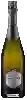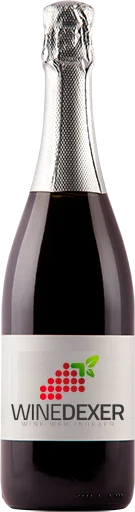
Cave Mont Blanc de Morgex et la SalleGlacier
 Sparkling wine



This wine generally goes well with
The Glacier of the Cave Mont Blanc de Morgex et la Salle is in the top 60 of wines of Valle d'Aosta.
Details and technical informations about Cave Mont Blanc de Morgex et la Salle's Glacier.
Discover the grape variety: Côt
Ribs have travelled a long way! In the Middle Ages it was indeed cultivated in the Yonne region. In Bordeaux, it was used in the production of vins clairets and was present in the Loire Valley where today it is only used in the AOC Touraine and Rosé d'Anjou. It goes by different names: Malbec in Bordeaux or Auxerrois in Cahors, in the Quercy vineyards, where it flourishes.it is a very old red grape variety with medium-sized bunches and berries with melting, juicy and sweet flesh. Very sensitive to frost, disease and temperature changes, it is very productive if preserved and if it reaches a good maturity.côt is used in the vineyards of several major appellations such as the AOC Médoc, Graves, Saint-Emilion, Pomerol, Bergerac, Pécharmant, Buzet, Malepère, Marcillac... Wines made from this grape variety are fruity, tannic, deep in colour and have good ageing potential Cultivated on a surface of 5.000 hectares in France, the côt is also very present in Argentina and Chile.
Last vintages of this wine
The best vintages of Glacier from Cave Mont Blanc de Morgex et la Salle are 2014, 2013, 2016
Informations about the Cave Mont Blanc de Morgex et la Salle
The Cave Mont Blanc de Morgex et la Salle is one of of the world's greatest estates. It offers 24 wines for sale in the of Valle d'Aosta to come and discover on site or to buy online.

The wine region of Valle d'Aosta
Valle d'Aosta is the smallest and least populated region in Italy, only one-eighth the Size of neighbouring Piedmont. It covers a mountainous area in the far northwest of Italy, where the country's borders meet those of France and Switzerland. Despite the region's small size and low profile, a wide range of red and white wines are produced from a selection of native and introduced Grape varieties. The most important of these is Picotendro, the local form of Nebbiolo.
The word of the wine: Liquid
Sweet wine containing more than 50 grams of residual sugar per liter. Sweet wines are made from grapes often affected by botrytis cinerea and concentrated either by passerillage (drying of the grapes on the vine stock), or after the harvest (straw wines), or by the cold (ice wines).