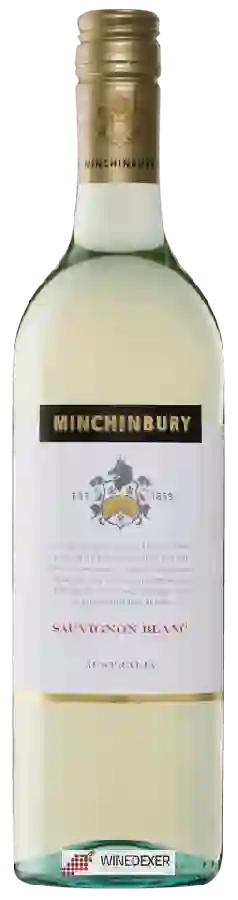
Winery MinchinburySauvignon Blanc
 White wine
In the mouth this white wine is a with a nice freshness.
This wine generally goes well with vegetarian, shellfish or goat cheese.

Taste structure of the Sauvignon Blanc from the Winery Minchinbury
Light | Bold | |
Dry | Sweet | |
Soft | Acidic |
In the mouth the Sauvignon Blanc of Winery Minchinbury in the region of Australie du Sud is a with a nice freshness.
Food and wine pairings with Sauvignon Blanc
Pairings that work perfectly with Sauvignon Blanc



Original food and wine pairings with Sauvignon Blanc
The Sauvignon Blanc of Winery Minchinbury matches generally quite well with dishes of shellfish, vegetarian or goat cheese such as recipes of chinese fried shrimp ravioli, spinach and goat cheese quiche or carrot and goat cheese pie.
Details and technical informations about Winery Minchinbury's Sauvignon Blanc.
Discover the grape variety: Gouais
Lively, neutral dry whites with a pale golden robe and a taut, acidic palate, with understated aromas of citrus and white flowers. Simple profile. Genetically the parent (with Pinot Noir) of many great varieties: Chardonnay, Aligoté, Gamay, Melon de Bourgogne, Riesling, etc. Today almost extinct, preserved for its exceptional genetic value in European variety collections. Historic white variety of Central Europe, ubiquitous in the Middle Ages.
Informations about the Winery Minchinbury
The Winery Minchinbury is one of of the world's great estates. It offers 14 wines for sale in the of Australie du Sud to come and discover on site or to buy online.

The wine region of Australie du Sud
Cradle of the great Australian Shiraz: powerful, sun-drenched reds with notes of blackberry, candied plum, pepper, chocolate and eucalyptus, ample tannins and vibrant fruit (Barossa, McLaren Vale). Firm, minty Cabernet Sauvignon on Coonawarra (terra rossa). Dry, lemony Riesling from Clare and Eden Valley, straight and taut. Fresh Sauvignon and Chardonnay from Adelaide Hills.
The word of the wine: Runoff
Failure of the vine flower to fertilize at the time of flowering, when the weather is too cold or rainy. Under these conditions, the vine will have few or no clusters.