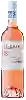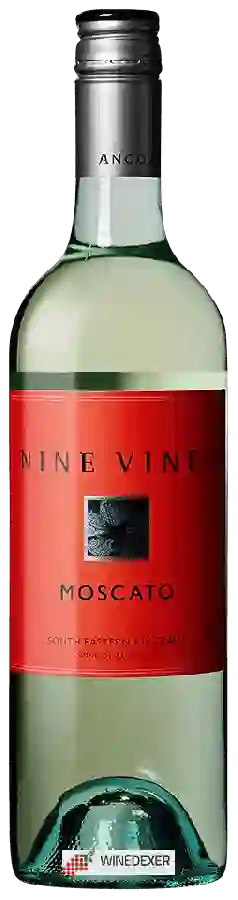
Winery AngoveNine Vines Moscato
 White wine


This wine generally goes well with sweet desserts
The Nine Vines Moscato of the Winery Angove is in the top 30 of wines of Australie du Sud.

Wine flavors and olphactive analysis

On the nose the Nine Vines Moscato of Winery Angove in the region of Australie du Sud often reveals types of flavors of citrus, green apple or apricot and sometimes also flavors of orange, tree fruit or citrus fruit.
Food and wine pairings with Nine Vines Moscato
Pairings that work perfectly with Nine Vines Moscato

Original food and wine pairings with Nine Vines Moscato
The Nine Vines Moscato of Winery Angove matches generally quite well with dishes of sweet desserts such as recipes of very simple muffins.
Details and technical informations about Winery Angove's Nine Vines Moscato.
Discover the grape variety: Acolon
Colourful, fruity reds with a dark ruby colour, light to firm tannins and a dense palate showing black cherry, blackberry, plum, soft spices and balsamic notes. A modern, early-ripening, productive profile. Grown in Württemberg and the Palatinate for modern German dry reds and blended with Trollinger and Lemberger. A 1971 Weinsberg cross of Lemberger × Dornfelder.
Last vintages of this wine

The best vintages of Nine Vines Moscato from Winery Angove are 2012, 2017, 2015, 2016 and 2018.
Informations about the Winery Angove
The Winery Angove is one of of the world's greatest estates. It offers 186 wines for sale in the of Australie du Sud to come and discover on site or to buy online.

The wine region of Australie du Sud
Cradle of the great Australian Shiraz: powerful, sun-drenched reds with notes of blackberry, candied plum, pepper, chocolate and eucalyptus, ample tannins and vibrant fruit (Barossa, McLaren Vale). Firm, minty Cabernet Sauvignon on Coonawarra (terra rossa). Dry, lemony Riesling from Clare and Eden Valley, straight and taut. Fresh Sauvignon and Chardonnay from Adelaide Hills.
The word of the wine: Rancio
Odour and taste characteristic of certain wines that have undergone oxidative maturation, i.e. in contact with oxygen (vin jaune du Jura, dry rancio du Roussillon, maury, banyuls, rivesaltes, etc.).