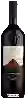
Winery MilaniPinot Grigio
 White wine


In the mouth this white wine is a .
This wine generally goes well with vegetarian, shellfish or mushrooms.
Taste structure of the Pinot Grigio from the Winery Milani
Light | Bold | |
Dry | Sweet | |
Soft | Acidic |
In the mouth the Pinot Grigio of Winery Milani in the region of Veneto is a .
Food and wine pairings with Pinot Grigio
Pairings that work perfectly with Pinot Grigio



Original food and wine pairings with Pinot Grigio

The Pinot Grigio of Winery Milani matches generally quite well with dishes of shellfish, vegetarian or mushrooms such as recipes of american style lobster tails, great chef style, zucchini quiche or the mushroom pie, so simple and so good!.
Details and technical informations about Winery Milani's Pinot Grigio.
Discover the grape variety: Saint Laurent
This grape variety was formerly cultivated in the southwest and in Alsace and the Toul region. It is also known in Germany, Austria, Luxembourg and Czechoslovakia. In France, it is no longer multiplied and is therefore in danger of disappearing.
Last vintages of this wine

The best vintages of Pinot Grigio from Winery Milani are 2017, 2014, 2016, 2018 and 0.
Informations about the Winery Milani
The Winery Milani is one of of the world's greatest estates. It offers 20 wines for sale in the of Veneto to come and discover on site or to buy online.

The wine region of Veneto
Veneto is an important and growing wine region in northeastern Italy. Veneto is administratively Part of the Triveneto area, aLong with its smaller neighbors, Trentino-Alto Adige and Friuli-Venezia Giulia. In terms of geography, culture and wine styles, it represents a transition from the Alpine and Germanic-Slavic end of Italy to the warmer, drier, more Roman lands to the South. Veneto is slightly smaller than the other major Italian wine regions - Piedmont, Tuscany, Lombardy, Puglia and Sicily - but it produces more wine than any of them.
The word of the wine: AOC
Appellation d'origine contrôlée. The most prestigious category of French wines created in the 1930s on the basis of quality criteria defined by a geographical delimitation, a chosen grape variety and precise production rules.