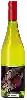
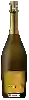
Winery Mas RougeLes Chuchotements de Jules
 White wine



In the mouth this white wine is a powerful.
This wine generally goes well with vegetarian, poultry or lean fish.
Taste structure of the Les Chuchotements de Jules from the Winery Mas Rouge
Light | Bold | |
Dry | Sweet | |
Soft | Acidic |
In the mouth the Les Chuchotements de Jules of Winery Mas Rouge in the region of Languedoc-Roussillon is a powerful.
Wine flavors and olphactive analysis

On the nose the Les Chuchotements de Jules of Winery Mas Rouge in the region of Languedoc-Roussillon often reveals types of flavors of tree fruit.
Food and wine pairings with Les Chuchotements de Jules
Pairings that work perfectly with Les Chuchotements de Jules



Original food and wine pairings with Les Chuchotements de Jules


The Les Chuchotements de Jules of Winery Mas Rouge matches generally quite well with dishes of pasta, vegetarian or poultry such as recipes of goat cheese and spinach lasagne, leek, goat cheese and bacon quiche or simple endive gratin with gruyere cheese.
Details and technical informations about Winery Mas Rouge's Les Chuchotements de Jules.
Discover the grape variety: Bianca
Complex interspecific crossing between 12375 Seyve-Villard (2 Eger) and Bouvier - a variety of Austrian origin - obtained in 1963 and in Hungary by Csizmazia Jozsef and Bereznai Laszlo. It should be noted that Bianca, a monogenic variety, which is nevertheless resistant to certain cryptogamic diseases, was "bypassed" in 2010 by a less resistant strain of mildew, which was also the case for Regent. It can be found in the United States, Serbia, Hungary, Austria, Italy, Switzerland, ... almost unknown in France. In these countries, it is certainly the most cultivated as a wine grape but it can also be found on the markets.
Informations about the Winery Mas Rouge
The Winery Mas Rouge is one of of the world's greatest estates. It offers 13 wines for sale in the of Languedoc-Roussillon to come and discover on site or to buy online.

The wine region of Languedoc-Roussillon
Languedoc (formerly Coteaux du Languedoc) is a key appellation used in the Languedoc-Roussillon wine region of southern France. It covers Dry table wines of all three colors (red, white and rosé) from the entire region, but leaves Sweet and Sparkling wines to other more specialized appellations. About 75% of all Languedoc wines are red, with the remaining 25% split roughly down the middle between whites and rosés. The appellation covers most of the Languedoc region and almost a third of all the vineyards in France.
The word of the wine: Performance
Quantity of grapes harvested per hectare. In AOC, the average yield is limited on the proposal of the appellation syndicate, validated by the Inao. The use of high-performance plant material (especially clones) and better control of vine diseases have increased yields. This is not without consequences on the quality of the wines (dilution) and on the state of the market (too much wine). We must not over-simplify: low yields are not synonymous with quality, and it is often in years with generous harvests that we find the greatest vintages (1982 and 1986 in Bordeaux, 1996 in Champagne, 1990 and 2005 in Burgundy...).