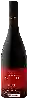
Winery Mas du SoleillaUne Belle Histoire La Clape
 Red wine


In the mouth this red wine is a powerful with a nice balance between acidity and tannins.
This wine generally goes well with beef, veal or pasta.
The Une Belle Histoire La Clape of the Winery Mas du Soleilla is in the top 30 of wines of Languedoc.
Taste structure of the Une Belle Histoire La Clape from the Winery Mas du Soleilla
Light | Bold | |
Smooth | Tannic | |
Dry | Sweet | |
Soft | Acidic |
In the mouth the Une Belle Histoire La Clape of Winery Mas du Soleilla in the region of Languedoc-Roussillon is a powerful with a nice balance between acidity and tannins.
Food and wine pairings with Une Belle Histoire La Clape
Pairings that work perfectly with Une Belle Histoire La Clape



Original food and wine pairings with Une Belle Histoire La Clape
The Une Belle Histoire La Clape of Winery Mas du Soleilla matches generally quite well with dishes of beef, pasta or veal such as recipes of navarin of the sea da gigi, capellini with prosciutto or provencal veal tendrons.
Details and technical informations about Winery Mas du Soleilla's Une Belle Histoire La Clape.
Discover the grape variety: Couderc 13
A direct producer hybrid obtained by Georges Couderc by crossing Vitis Lincecumii (Buckley) with 162-5 Couderc, the latter having 3/4 blood of Vinifera-Rupestris. Today, like most hybrids, it has practically disappeared. It can still be found in a mixture in very old vineyards, the photographs below were taken in the Ardèche, on the border with the Gard, north of Saint Ambroix.
Last vintages of this wine
The best vintages of Une Belle Histoire La Clape from Winery Mas du Soleilla are 2014
Informations about the Winery Mas du Soleilla
The Winery Mas du Soleilla is one of of the world's great estates. It offers 28 wines for sale in the of Languedoc to come and discover on site or to buy online.

The wine region of Languedoc
Languedoc (formerly Coteaux du Languedoc) is a key appellation used in the Languedoc-Roussillon wine region of southern France. It covers Dry table wines of all three colors (red, white and rosé) from the entire region, but leaves Sweet and Sparkling wines to other more specialized appellations. About 75% of all Languedoc wines are red, with the remaining 25% split roughly down the middle between whites and rosés. The appellation covers most of the Languedoc region and almost a third of all the vineyards in France.
The wine region of Languedoc-Roussillon
Languedoc (formerly Coteaux du Languedoc) is a key appellation used in the Languedoc-Roussillon wine region of southern France. It covers Dry table wines of all three colors (red, white and rosé) from the entire region, but leaves Sweet and Sparkling wines to other more specialized appellations. About 75% of all Languedoc wines are red, with the remaining 25% split roughly down the middle between whites and rosés. The appellation covers most of the Languedoc region and almost a third of all the vineyards in France.
The word of the wine: Cellar master
The cellar master is the technical manager of a winery (usually a professional oenologist), who presides over and oversees the wine-making process and its maturation. Unlike an oenologist in a wine laboratory, who intervenes on an ad hoc basis to assist the winemaker, the cellar master is part of the estate's technical team.