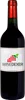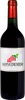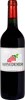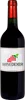
Winery MarkelsheimWeikersheimer Tauberberg Zweigelt
 Red wine



This wine generally goes well with blue cheese, pork or lamb.
Food and wine pairings with Weikersheimer Tauberberg Zweigelt
Pairings that work perfectly with Weikersheimer Tauberberg Zweigelt



Original food and wine pairings with Weikersheimer Tauberberg Zweigelt

The Weikersheimer Tauberberg Zweigelt of Winery Markelsheim matches generally quite well with dishes of lamb, pork or mature and hard cheese such as recipes of couscous chicken and merguez, suckling pig leg in the oven or parmesan cream brûlée.
Details and technical informations about Winery Markelsheim's Weikersheimer Tauberberg Zweigelt.
Discover the grape variety: Zweigelt
Intraspecific crossing between the saint laurent and the limberger realized in 1922 and in Austria by Fritz Zweigelt (1888/1964) who named it rotburger. Very well known in Austria, it can be found in most Eastern countries, Japan, Germany, Great Britain, the Netherlands, Belgium, Switzerland, Italy, Canada, the United States, etc. In France, it is not very well known and yet this variety has interesting qualities when vinified as a single variety for both red and rosé wines. - Synonyms: rotburger, klosterneuburger, zweigelt blau, blauer-zweigelt in Germany, zweigeltrebe in Austria, Great Britain and the Czech Republic, blauer zwelgetrabe in Hungary, etc. (for all the synonyms of the grape varieties, click here !)
Last vintages of this wine
The best vintages of Weikersheimer Tauberberg Zweigelt from Winery Markelsheim are 0
Informations about the Winery Markelsheim
The Winery Markelsheim is one of of the world's greatest estates. It offers 72 wines for sale in the of Württemberg to come and discover on site or to buy online.

The wine region of Württemberg
Württemberg is known as Germany's premier red wine region. With almost 11,500 hectares (28,500 acres) of vineyards, it is the fourth-largest wine region in the country. Found adjacent to Baden and South of Franken, Wüttemberg is a particularly hilly and rural wine-region. Almost 70-percent of Württemberg wines are red, predominantly made from Trollinger, SchwarzRiesling and Lemberger.
The word of the wine: Apogee
This period varies greatly depending on the type of wine and the vintage, and corresponds to the optimum quality of a wine. After the peak comes the decline.