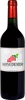
Winery MaierCalidus Trocken
 Red wine


This wine is a blend of 2 varietals which are the Dornfelder and the Zweigelt.
This wine generally goes well with blue cheese, pork or lamb.
Wine flavors and olphactive analysis

Food and wine pairings with Calidus Trocken
Pairings that work perfectly with Calidus Trocken



Original food and wine pairings with Calidus Trocken

The Calidus Trocken of Winery Maier matches generally quite well with dishes of lamb, pork or mature and hard cheese such as recipes of lamb roast with lavender, kig ha farz (breton stew) or peppers with lentil stuffing.
Details and technical informations about Winery Maier's Calidus Trocken.
Discover the grape variety: Dornfelder
German, intraspecific cross made in 1955 by August Karl Herold (1902-1973) between the helfensteiner and the heroldrebe (more details, click here!). With these same parents he also obtained the hegel. The Dornfelder can be found in Switzerland, United Kingdom, Belgium, Germany, Austria, Czech Republic, Canada, United States, ... . Virtually unknown in France, we nevertheless recognize a certain interest in it due to its short phenological cycle and the quality of its wines, both rosé and red.
Last vintages of this wine
The best vintages of Calidus Trocken from Winery Maier are 2016, 0
Informations about the Winery Maier
The Winery Maier is one of of the world's great estates. It offers 35 wines for sale in the of Württemberg to come and discover on site or to buy online.

The wine region of Württemberg
Württemberg is known as Germany's premier red wine region. With almost 11,500 hectares (28,500 acres) of vineyards, it is the fourth-largest wine region in the country. Found adjacent to Baden and South of Franken, Wüttemberg is a particularly hilly and rural wine-region. Almost 70-percent of Württemberg wines are red, predominantly made from Trollinger, SchwarzRiesling and Lemberger.
The word of the wine: Second fermentation
In the making of champagne, fermentation of the base wine to which is added the liqueur de tirage and which takes place in the bottle. This second fermentation produces the carbon dioxide, and therefore the bubbles that make up the effervescence of the wine.